
The Prevention of Sexual Harassment (POSH) Act, 2013 is an exemplary piece of legislation in India that has been under the limelight due to its focus on gender equity and safety in the workplace. The Act has forced organizations to design safer and more diverse working environments in the last decade by requiring internal redressal and preventive training.
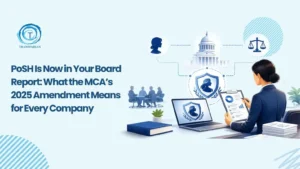
But 2025 will be the turning point in POSH compliance. Board-level reporting has become a new requirement introduced by the Ministry of Women and Child Development (MWCD) and has increased the transparency and accountability standards. The organizations are now required to offer systematic disclosures at board level on the position of complaints, resolutions and preventative efforts.
To CHROs, the HR compliance heads, and legal teams, this regulatory change is not another compliance box to check. It is the indication of a new period when the corporate governance and workplace culture are united and the focus on the prevention of harassment becomes the main topic of the boardrooms.
Regulatory Update 2025: What’s New in POSH Compliance
The new 2025 POSH policy updates mandate that companies formally report sexual harassment-related data to their boards of directors. This shift aims to align corporate governance practices with evolving workplace realities and investor expectations.
Key requirements under the board-level POSH reporting mandate include:
- Annual Disclosure to the Board: Companies must provide a yearly report outlining the number of complaints received, status of investigations, resolutions, and pending cases.
- Redressal Outcomes: Boards must be informed of disciplinary actions taken, settlements reached, or unresolved matters requiring escalation.
- Preventive Measures: Disclosure now extends to awareness sessions, POSH training for employees, leadership sensitization programs, and policy reinforcement steps taken during the year.
- Integration into Annual Reports: Listed entities may be required to include a section on POSH Act board disclosure as part of their annual corporate governance filings.
- Audit Trail: Organizations undergoing POSH compliance audits must maintain transparent documentation that can withstand external and board-level scrutiny.
This update reflects a growing regulatory emphasis on transparency, accountability, and governance-level responsibility for workplace harassment prevention.
Why This Update Matters
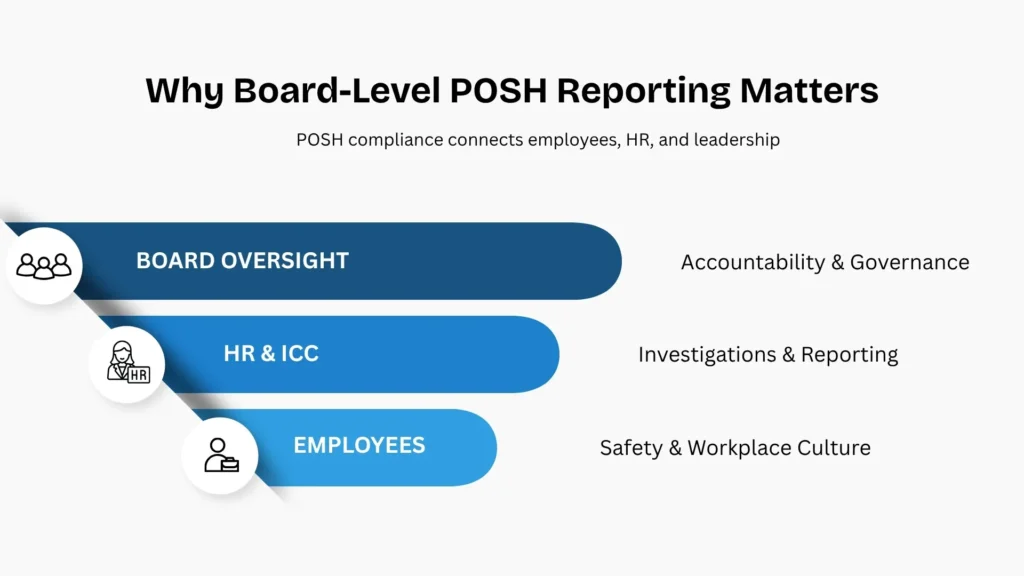
- Strategic Significance: By elevating sexual harassment reporting to the boardroom, regulators are signaling that harassment prevention is no longer just an HR or compliance issue. It’s a core governance priority.
- Ethical Imperative: Mandatory reporting pushes companies to go beyond symbolic policies, ensuring leaders at the highest level are accountable for workplace safety.
- Stakeholder Confidence: Investors, customers, and employees increasingly expect companies to demonstrate strong ethics. Workplace harassment reporting in India at the board level builds trust and reputation.
- Cultural Transformation: When boards take ownership of POSH compliance, it sets the tone for a zero-tolerance culture, empowering employees to speak up without fear of retaliation.
Impact on HR and Compliance Leaders
For HR compliance teams, this shift will require enhanced processes and greater diligence. Key changes include:
- Robust Documentation: Every complaint, investigation, and resolution must be recorded with accuracy to support transparent board-level reporting.
- Quarterly Compliance Reviews: Instead of annual reporting alone, HR leaders may need to conduct quarterly internal reviews to prepare interim updates for management.
- Strengthened ICC (Internal Complaints Committee): The ICC’s role becomes even more critical as its findings directly influence board-level disclosures. Appointing credible external members and ensuring timely case closures will be non-negotiable.
- Collaboration with Legal & Governance Teams: HR must partner closely with company secretaries, legal officers, and governance teams to ensure that board disclosures align with corporate filings.
- Policy Reinforcement: Companies must review their POSH policy to ensure it reflects the latest compliance updates of 2025 and communicates a clear escalation protocol.
Industry Insights: POSH Trends in 2025
Several industry developments are shaping how organizations are adapting to the new compliance landscape:
- Large Corporations Leading the Way: Top Indian enterprises have already begun integrating POSH compliance into their corporate governance frameworks, publishing anonymized data in sustainability and ESG reports.
- Transparency as a Competitive Advantage: More and more, organizations are beginning to advertise their compliance audit preparedness as part of their employer branding, an indication of their concern with safe workplaces.
- Tech-Driven Compliance: The use of HR technology platforms in terms of incident reporting, documentation, and analytics is increasing. Businesses are integrating AI-based software to detect harassment patterns, produce reports and reduce the human factor in complaints management.
- External Experts in Demand: Many businesses are engaging a POSH consultant to review their policies, conduct training, and ensure board reporting is legally sound.
- Training Goes Continuous: Instead of one-off sessions, organizations are building a cadence of POSH workshops, leadership town halls, and posh awareness training modules.
Steps for Ensuring 100% POSH Readiness in 2025
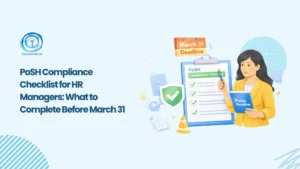
To help HR leaders and compliance officers stay ahead, here’s a practical POSH compliance checklist aligned with the new board reporting requirements:
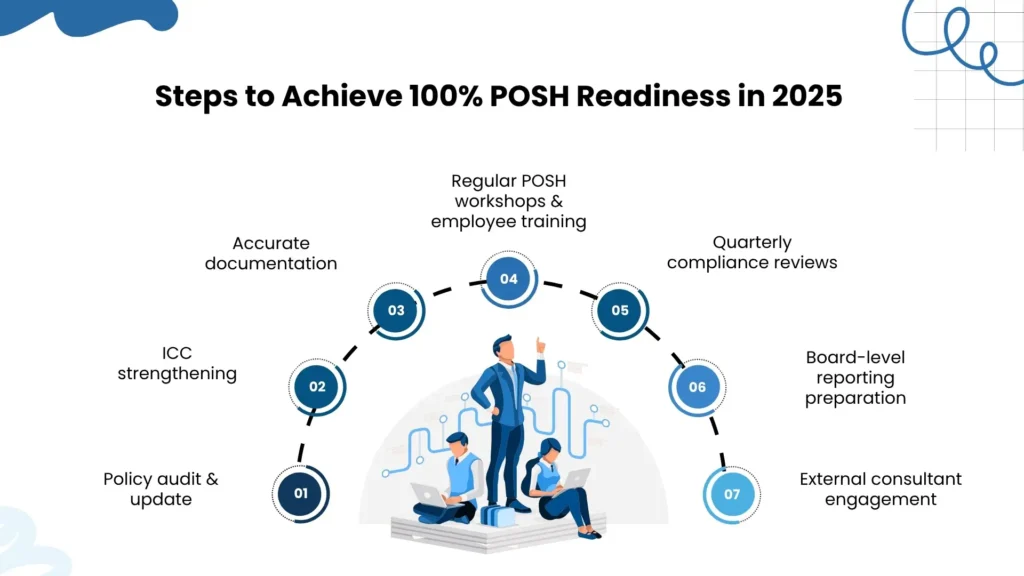
- Policy Audit
- Review your current POSH policy and ensure it incorporates 2025 updates on board disclosures.
- Confirm escalation protocols for unresolved cases.
- Strengthen the ICC
- Ensure the Internal Complaints Committee is duly constituted with an external member.
- Provide ICC members with advanced training in investigative best practices.
- Enhance Documentation Systems
- Maintain digital case logs with timestamps and resolution notes.
- Invest in compliance software that auto-generates board-ready reports.
- Training & Awareness Cadence
- Conduct POSH training for employees at least twice annually.
- Implement leadership-specific sessions to ensure top management sensitivity.
- Quarterly Internal Reviews
- Schedule quarterly reviews to monitor case trends, pending investigations, and training progress.
- Use this data to prepare interim updates for CXOs and governance teams.
- Engage External Experts
- Partner with a consultant for unbiased policy reviews and mock audits.
- Bring in external trainers for interactive POSH workshops.
- Board-Level Reporting
- Prepare a standardized template for disclosures (complaints, resolutions, preventive actions).
- Share anonymized data to balance transparency with confidentiality.
Common Compliance Gaps Noticed in 2025 Audits
Despite heightened awareness, POSH audits in 2025 have revealed recurring gaps across organizations:
- Incomplete or Outdated Policies: Many companies have not updated their policies to reflect board-level disclosure requirements.
- Weak Documentation Practices: Case files are often incomplete, lacking evidence logs or resolution notes.
- Inactive ICCs: Some committees exist only on paper, failing to conduct timely investigations.
- Insufficient Training: Organizations conduct a one-off session at induction but neglect continuous awareness.
- Board Reporting Ambiguity: Without clear templates, many companies struggle to communicate data effectively while safeguarding confidentiality.
- Over-Reliance on HR Alone: Failure to integrate compliance responsibilities with legal and governance functions creates blind spots.
Addressing these gaps proactively is essential to avoid regulatory penalties, reputational damage, and workplace dissatisfaction.
Conclusion
The 2025 board-level POSH compliance mandate represents a paradigm shift in how organizations approach workplace safety. By requiring directors to review harassment-related disclosures, regulators are ensuring that accountability extends to the very top of corporate leadership.
For HR and compliance leaders, this update is both a challenge and an opportunity: a challenge because it demands more rigorous processes, and an opportunity because it reinforces the organization’s ethical foundation.
Proactive compliance, regular POSH training for employees, transparent compliance audits, and collaboration with a posh consultant can help companies not only meet legal requirements but also foster a culture of respect and equity.
Now is the time for every CHRO and HR head to review their POSH policies, conduct internal audits, and prepare board-ready reports. Compliance is no longer just about avoiding penalties, it’s about building a workplace where safety, dignity, and ethics are non-negotiable.
FAQ’s
Organizations must disclose annual complaints, resolutions, preventive measures, and training activities to their boards.
The HR head, Internal Complaints Committee (ICC), and legal or governance teams collaborate to prepare board-level reports.
Quarterly reviews are recommended to ensure accurate reporting and timely resolution of complaints.
While large enterprises and listed companies are the primary focus, startups with 100+ employees are strongly advised to comply proactively.
Engaging a POSH consultant can help review policies, conduct POSH workshops, prepare board reports, and ensure audit readiness.