Organizations in India are no longer content with the checkbox compliance, but are adopting a more substantive way of curbing harassment in workplaces. Still, the difficulty that most companies cannot avoid is the following: How can PoSH training become interactive, engaging, and really effective in case employees already seem to be bombarded with corporate training sessions?
As hybrid workforces grow, digital communications become difficult, and employees increasingly expect more, 2025 requires a rethinking of PoSH training, combining the legal knowledge with behavioural change, cultural sensitivity, and quantifiable results.
While traditional training formats still play a role, the need of today’s workplaces is clear, organizations require PoSH training, PoSH workshop formats, and PoSH training programs that don’t just meet the law but also build trust, awareness, and a safer working environment.
Why 2025 Requires a Modern Approach to PoSH Learning
Current workplaces are functioning through chat applications, teamwork websites, and video conferences, and hybrid spaces. This has broadened the scope and nature of harassment and misconduct in digital form, boundary crossing in remote locations, and out-of-office inappropriate communication.
Employees now expect training that:
- Feels relevant to their lived experiences
- Covers real-world and digital scenarios
- Offers psychological safety
- Goes beyond legal jargon
- Encourages active participation
This has changed the reason why progressive organizations are reconsidering the manner in which they construct workplace harassment training, corporate posh training and PoSH awareness training.
Core Elements Every Interactive PoSH Training Program Should Include
Majority of the firms are well-informed about the basic sections of the PoSH Act, which are already covered but to develop an interactive program, one needs to create the basics into reality.
1. Realistic scenario-based learning
Rather than theoretical definitions, employees are more responsive to scenarios that they can relate to real-life instances of inappropriate behavior in the workplace, such as making remarks on video calls, making jabs, being bossy, or crossing boundaries during after-hours conversations. Scenario-building makes the employees realise what is meant by harassment.
2. Behavioural and cultural insights
Recent training should deal with micro-aggression, unconscious bias, power, and how workplace culture facilitates misconduct. These are the areas that are usually absent in the traditional training yet required in the improved workplace culture.
3. Clear explanation of roles
Employees, managers, HR leaders, and ICC members need clarity on:
- Where to report
- Confidentiality norms
- Inquiry timeline
- Responsibilities of bystanders
- What managers must prevent or escalate
This makes posh training for managers especially important because leadership actions strongly influence reporting behaviour.
4. Participation-driven formats
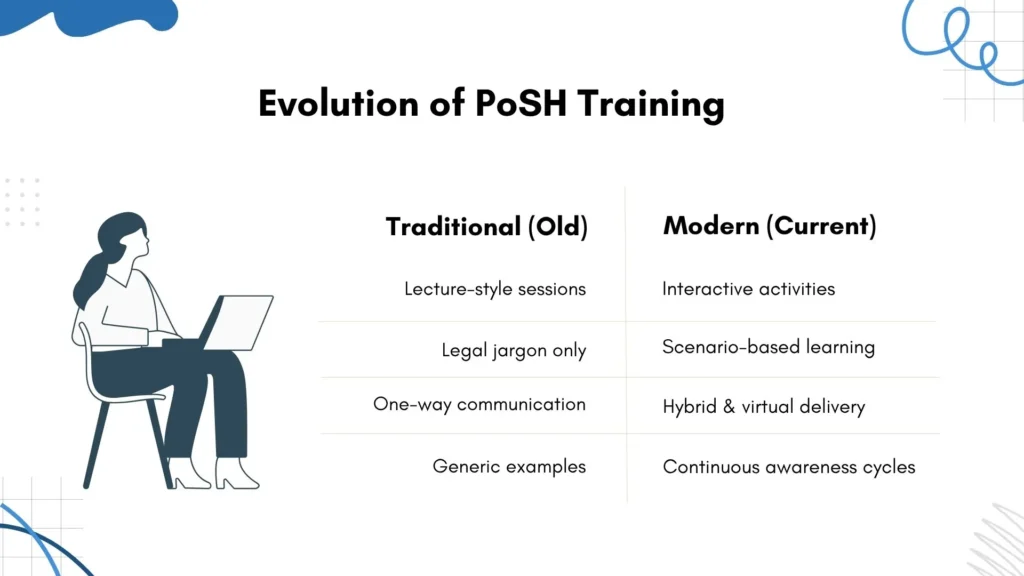
Increase engagement and retention with the use of quizzes, live case discussions, role-plays, breakout activities, and interactive digital tools.
5. Multilingual and accessible modules
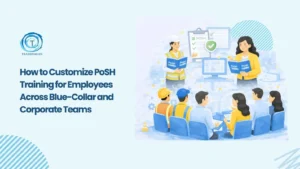
Companies that employ diverse groups must have texts in local languages and formats direct to non-desk employees, gig employees and teams in the field.
The Evolving Role of PoSH Training in 2025
In 2025, PoSH awareness extends far beyond the annual in-person session. Several shifts are reshaping how organizations implement employee awareness training:
Hybrid and distributed workplaces
Employees now collaborate across offices, remote setups, and co-working spaces. This increases the risk of blurred boundaries, informal communication issues, and limited visibility into team interactions. Training must therefore address conduct in digital communication, virtual meetings, collaborative platforms, and informal chat channels.
Legal updates and compliance-driven expectations
Organizations are expected to demonstrate continuous efforts toward PoSH compliance, including documentation, records of training, attendance, IC functioning, and awareness programs for every employee category. The compliance pressure intensifies with increased scrutiny from authorities and internal audits.
Rise of digital learning ecosystems
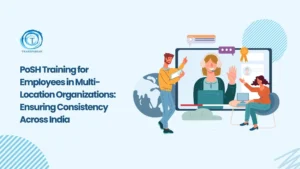
With teams spread across cities, states, and countries, organizations now adopt virtual PoSH workshops, digital modules, and LMS-based tracking to maintain uniformity. This ensures all employees complete training on time and receive consistent, high-quality learning regardless of location.
Workforce expectations
Employees, especially Gen Z and young professionals, expect training to be interactive, relevant, and engaging not theory-heavy. They look for real scenarios, relatable examples, and actionable guidance, not lengthy PowerPoint lectures.
These changes push PoSH initiatives from procedural compliance to learning experiences that influence culture and behavior.
Building PoSH Training Programs Employees Actually Enjoy
Organizations need to concentrate on the creation of value by personal relevance to create interactive PoSH training programs. Here’s how:
Use storytelling over legal jargon
Employees listen to the stories that the company can relate to and they receive concepts more easily. It also aids in normalizing discourses concerning boundaries, respect and workplace behaviour.
Encourage open dialogue
The compliance sessions disrupt employees in asking questions. It is best to enable anonymous question posting or discussion groups so that people are more honest in their participation.
Gamified learning experiences
There is the inclusion of point-based challenges, scenario simulation, microlearning modules and certification badges that will add motivation and engagement.
Break the content into modular sessions
Providing sharp training modules rather than long session training can make the employees learn better.
Interactive Formats That Work Best in 2025
1. Hybrid PoSH Learning Paths
A combination of live classes, video-based self-pacing, microlearning, and testing will make sure that all employees (wherever they are) are addressed.
2. Microlearning nudges
Weekly nudges can be used to support the most important tenets such as consent, respectful communication, digital boundaries, and etiquette at work.
3. Peer-to-peer learning pods
Learning through small group discussions makes it relatable and assists the employees to give their points of view that they might not raise in the large training rooms.
4. Role-play and mock inquiry
The role-plays assist the participants to learn about the power relationships, reporting requirements and expectations of behaviour in practical scenarios.
Designing PoSH Training for Different Employee Groups
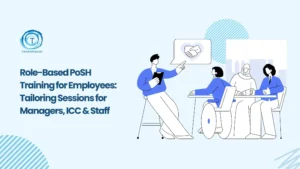
A well-designed program offers separate learning paths for:
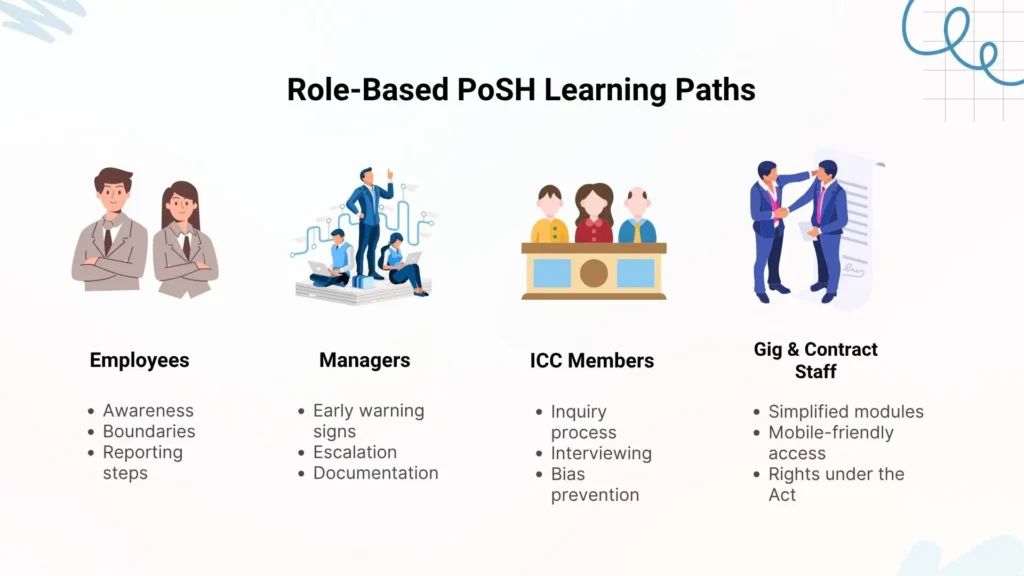
Employees
Focus on awareness, boundaries, reporting steps, and digital behaviour.
Managers
Focus on spotting early warning signs, escalation, documentation, and leadership accountability.
ICC Members
Focus on the inquiry process, interviewing, bias prevention, report writing, and case evaluation.
Contractual & Gig Workers
Focus on accessibility, simplified awareness, mobile-friendly content, and rights under the Act.
Partnering with the Right PoSH Consultant
Organizations often benefit from partnering with a specialized posh consultant that understands both compliance and human behaviour. The right partner can help you:
- Customize training to your industry
- Build ICC capability
- Conduct awareness sessions for complex teams
- Offer multilingual delivery
- Provide digital tools for assessments and tracking
- Run refresher training and behavioural workshops
External trainers often help employees feel more comfortable discussing sensitive topics openly.
Key Features of an Impactful PoSH Training Strategy
To make your 2025 training truly effective, integrate these elements:
1. Annual and periodic refreshers
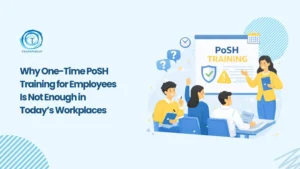
Laws require annual training, but quarterly nudges or semi-annual refreshers improve retention.
2. Multi-role specific paths
Different groups need different depth levels of leadership, employees, ICC members, contract staff, and gig workers.
3. Real-time assessments & engagement analytics
Measure knowledge gaps, participation levels, confidence to report, and behavioural improvements.
4. Culture-building activities
Supplement training with posters, internal campaigns, and communication touchpoints to reinforce positive behaviour.
5. Digital-first delivery
Make virtual posh training accessible via mobile, LMS platforms, and short video modules.
FAQ’s
An interactive PoSH program includes scenarios, quizzes, role-plays, breakout discussions, storytelling, and digital learning tools that require employees to actively participate rather than passively listen.
The law mandates annual PoSH training, but best practices include refresher sessions every 6 months and microlearning touchpoints throughout the year to reinforce awareness.
Employees are trained on awareness and reporting. Managers receive deeper training on early intervention, escalation processes, documentation, and preventing retaliation. Their responsibilities are broader and more sensitive.
Yes. All workers who interact with the organization including gig workers, interns, consultants, and freelancers must be covered under PoSH awareness initiatives.
Effective training builds trust, psychological safety, and respectful communication. It reduces misconduct, increases reporting awareness, and strengthens overall organizational culture.