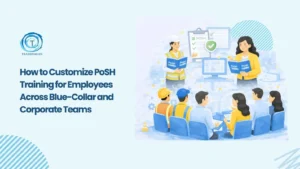
Creating a respectful, inclusive, and legally compliant workplace requires more than a one-size-fits-all awareness session. Organizations today are increasingly realizing that role based posh training is essential to translate legal compliance into everyday workplace behaviour. Employees, managers, leadership teams, and Internal Committee (ICC) members all play different roles under the PoSH Act, and their training needs must reflect those responsibilities.
This is where posh training for employees evolves from a compliance checkbox into a culture-building tool that actively supports a safe workplace for employees.
Why Role-Based PoSH Training Matters Beyond Awareness
Traditional posh awareness training often focuses on definitions and legal provisions, but fails to answer practical questions employees ask, such as:
- What is expected of me in my role?
- How should I respond if I witness inappropriate behaviour?
- What are my responsibilities if someone reports an issue to me?
PoSH Training Programs designed around roles ensure clarity, accountability, and confidence across the organization. When training is tailored, employees don’t just understand the law they understand their role within it.
Understanding Role Differentiation Under the PoSH Act
The PoSH Act outlines obligations for employers but assigns implicit responsibilities to different workplace roles. Effective posh training breaks these responsibilities down clearly:
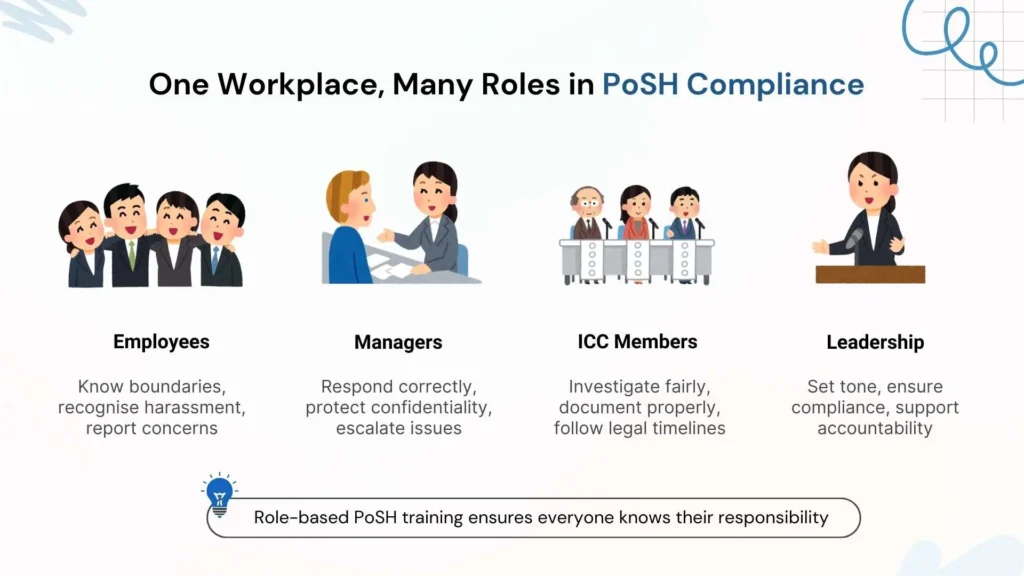
- Employees need behavioural clarity and reporting confidence
- Managers need response protocols and accountability frameworks
- ICC members need procedural, investigative, and documentation expertise
- Leadership needs cultural ownership and risk governance awareness
This layered approach forms the foundation of interactive posh training that actually changes behaviour.
Role-Based PoSH Training for Employees (All Staff)
Employees often want clarity rather than legal detail. Posh training for employees should explain what constitutes harassment, how intent and impact differ, and how boundaries apply in real workplace interactions.
Key Focus Areas
- Definitions and examples of workplace sexual harassment
- Understanding consent, boundaries, and professional conduct
- Explanation of the posh reporting mechanism
- Rights, protections, and non-retaliation assurance
- Awareness of posh complaints timelines and support processes
Most training stops at complaint filing, but effective role-based sessions also explain documentation basics, emotional safety, and respectful peer behaviour, especially in sensitive or ambiguous situations.
Bystander Intervention Training: Filling a Critical Gap
A major area that traditional training overlooks is bystander intervention training. Many employees witness inappropriate behaviour but hesitate to act because they are unsure of their role or fear negative consequences.
Role-based training helps employees understand how to intervene safely, support colleagues without escalating situations, and report concerns responsibly. When bystanders are empowered, organizations move from reactive compliance to proactive prevention, reinforcing a shared commitment to a safe workplace for employees.
Role-Based PoSH Training for Managers & Supervisors
Managers are often the first point of contact when issues arise, yet they are rarely trained adequately for this responsibility.
Why posh training for managers Is Critical
Managers must balance empathy, neutrality, confidentiality, and compliance all under pressure.
Training Must Cover
- Managerial responsibilities under PoSH compliance
- How to receive complaints without bias or judgement
- Immediate steps after receiving a concern
- What not to say or promise
- Escalation protocols to the ICC
- Maintaining confidentiality and avoiding retaliation
Common Gaps Addressed Through Role-Based Training
- Handling informal complaints vs formal complaints
- Responding to third-party or bystander reports
- Managing team dynamics post-complaint
- Documentation responsibilities and record integrity
Managers trained through scenario based posh training are far better equipped to act correctly in real situations.
Role-Based PoSH Training for Leadership & Senior Management
Posh training for leadership is often overlooked, yet leadership behaviour sets the cultural tone of the organization.
Leadership-Specific Focus Areas
- Legal accountability and reputational risk
- Oversight of PoSH compliance frameworks
- Resource allocation for effective implementation
- Supporting ICC independence
- Leading by example in conduct and communication
Leadership training also addresses strategic questions such as:
- How PoSH compliance impacts employer branding
- Managing high-risk cases involving senior employees
- Aligning policies with organizational values
When leaders actively participate in posh training, it signals zero tolerance and builds trust across levels.
Specialized Role-Based Training for Internal Committee (ICC)
ICC members require the most detailed and technical training due to their quasi-judicial role.
What ICC Training Must Include
- Detailed provisions of the PoSH Act
- Complaint admissibility checks
- Inquiry procedures and principles of natural justice
- Evidence evaluation and witness handling
- Drafting findings and recommendations
- Confidentiality obligations and penalties
Beyond procedure, role-based ICC training should address bias awareness, trauma-informed interviewing, and confidentiality risks. Proper handling of records and legally sound posh training documentation is critical, as procedural lapses can undermine both fairness and compliance.
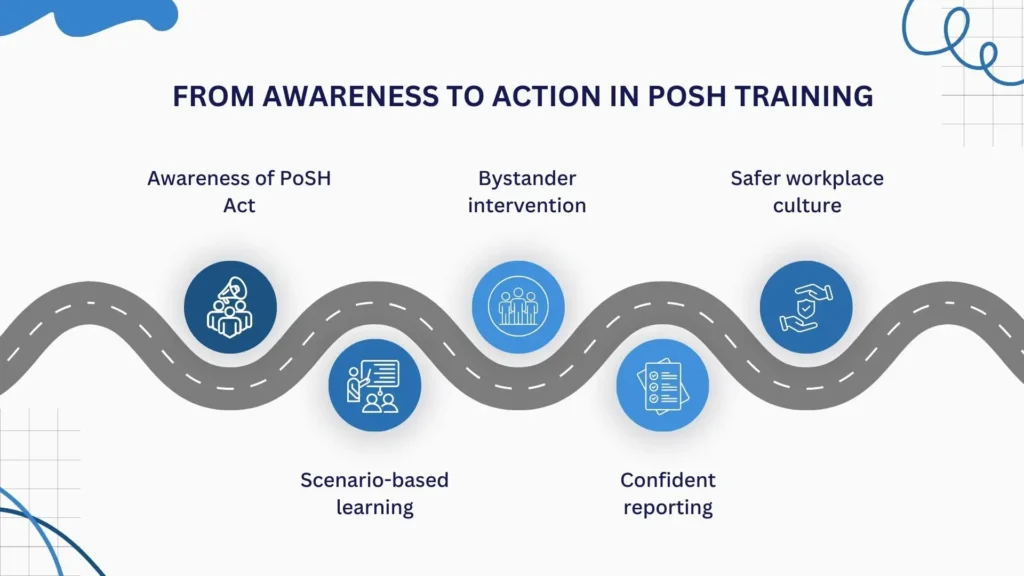
Interactive & Scenario-Based Training: Turning Awareness into Action
Generic presentations rarely change behaviour. Interactive posh training methods improve retention and real-world application.
Effective formats include:
- Role-play simulations
- Case-based group discussions
- Anonymous polling and Q&A
- Industry-specific scenarios
- Digital harassment simulations for hybrid teams
Scenario based posh training helps participants understand consequences, intent, and appropriate responses something policy documents alone cannot achieve.
Addressing Digital & Remote Workplace Harassment
Modern training must reflect modern workplaces. Role-based modules should include digital communication boundaries, inappropriate behaviour on messaging platforms, and conduct during virtual meetings.
Employees and managers must clearly understand that the posh reporting mechanism applies equally to online and offline interactions, ensuring consistent protection in hybrid and remote work environments.
Importance of PoSH Training Documentation & Compliance Records
Many organizations conduct training but fail to maintain proper records.
Effective posh training documentation includes:
- Attendance records
- Training content outlines
- Role-based modules covered
- Trainer credentials or posh consultant details
- Assessment or feedback summaries
These records are crucial during audits, inspections, or legal scrutiny and form a key pillar of PoSH compliance.
Measuring the Effectiveness of Role-Based PoSH Training
Effective PoSH Training Programs focus on outcomes, not attendance. Organizations increasingly measure awareness levels, reporting confidence, and manager response accuracy to evaluate training impact.
Regular feedback and assessment help refine training content, close behavioural gaps, and strengthen trust in the system.
The Role of a PoSH Consultant in Role-Based Training
An experienced posh consultant brings objectivity, legal clarity, and practical insight that internal teams may lack.
Their role often includes:
- Designing customized role based posh training frameworks
- Delivering sensitive sessions neutrally
- Supporting ICC capacity building
- Advising on policy alignment
- Ensuring training meets evolving compliance standards
Building a Culture of Safety Through Role-Based PoSH Training
When posh training is tailored, interactive, and role-specific, it stops being a compliance exercise and becomes a cultural cornerstone. Employees feel safer, managers act responsibly, ICCs function effectively, and leadership drives accountability.
By addressing both what is commonly covered and what is often missed such as bystander action, digital misconduct, emotional safety, and documentation organizations create training programs that truly support a respectful, compliant, and inclusive workplace.
FAQ’s
Employees need clarity on behaviour and reporting, while managers must know how to respond to concerns, maintain confidentiality, and escalate issues correctly. Role based training ensures both groups act appropriately in real situations.
Yes, PoSH training is mandatory for all employees as part of PoSH compliance. Every employee must be aware of what constitutes sexual harassment and how the reporting mechanism works.
PoSH training for managers should cover how to receive complaints, avoid bias, maintain confidentiality, document concerns, and coordinate with the Internal Committee without taking informal actions.
Bystander intervention training empowers employees to recognise inappropriate behaviour early and respond safely. It helps prevent escalation and supports a safe workplace for employees beyond formal complaints.
PoSH training should be conducted at least annually, with refresher sessions whenever there are policy updates, new hires, or changes in the Internal Committee structure.
A PoSH consultant brings legal expertise, neutrality, and practical insight to design effective role based PoSH training programs that meet compliance requirements and address real workplace challenges.