Ensuring a safe and respectful workplace is both a legal obligation and a business necessity. The PoSH Compliance framework under the Sexual Harassment of Women at Workplace (Prevention, Prohibition and Redressal) Act, 2013, requires organizations to establish systems that prevent harassment, address complaints effectively, and foster accountability. Many organizations face challenges with implementation, as compliance is an ongoing process that starts with policy drafting and continues through case closure, reporting, and prevention.
This roadmap offers a practical, step-by-step guide for the full PoSH compliance process. It also covers important areas that are sometimes missed, like audit readiness, investigation steps, and how to connect compliance with HR systems.
Phase 1: Understanding Legal Requirements and Compliance Readiness
The first step in implementing PoSH Compliance in India is understanding the legal obligations and assessing your organization’s readiness. Every organization with 10 or more employees must comply with statutory requirements, including creating policies, forming committees, providing training, and reporting.
This phase includes:
- Understanding PoSH Act compliance requirements
- Identifying compliance gaps through internal review
- Evaluating existing HR policies and complaint systems
- Defining roles for HR, management, and leadership
Organizations should conduct a PoSH compliance gap analysis to determine whether their workplace harassment prevention systems align with legal standards. This step helps ensure the organization is prepared before implementing structural compliance measures.
Phase 2: Drafting and Implementing a Legally Compliant PoSH Policy
A clear and thorough PoSH policy is the foundation of good compliance at work. The policy should define what behaviors are not allowed, explain how to report issues, and describe how investigations will be handled.
A strong policy should include:
- Definition of workplace sexual harassment
- Scope covering employees, interns, contractors, and remote workers
- Complaint submission process and timelines
- Confidentiality and non-retaliation protections
- Disciplinary actions and corrective measures
The policy should be part of the employee handbook and easy to find on the HRMS or company intranet. Clear communication helps employees know their rights and keeps the PoSH compliance process transparent.
Phase 3: Formation of Internal Committee (IC)
Forming an Internal Committee is a key legal requirement under the PoSH Act. This committee handles complaints and makes sure investigations are fair.
Key requirements include:
- A senior female employee as the Presiding Officer
- At least two employee members
- One external member with relevant expertise
- Proper documentation of the committee structure
Organizations should also define internal committee roles and responsibilities PoSH, including complaint handling, investigation procedures, and reporting duties.
Working with a qualified PoSH Consultant can help set up the committee properly and train members to handle sensitive cases with professionalism.
Phase 4: Establishing a Complaint Reporting and Redressal Mechanism
A trustworthy and private way to report complaints is essential for PoSH procedures. Employees need to feel safe reporting incidents without worrying about retaliation.
Key elements include:
- Dedicated email or reporting portal
- Clear complaint submission guidelines
- Anonymous reporting options were feasible.
- Defined escalation channels
The organization should set up a clear process for handling PoSH complaints, making sure each complaint is acknowledged quickly and investigated within the required legal timeframes.
This step builds trust and helps the organization meet PoSH documentation requirements.
Phase 5: Conducting PoSH Training and Employee Awareness Programs
Training is key for both prevention and compliance. Regular PoSH training helps employees understand what behavior is acceptable at work and how to report problems.
Training programs should include:
- Employee awareness sessions
- Manager and leadership sensitization training
- Internal Committee investigation training
- Onboarding compliance training for new hires
These programs help organizations meet PoSH training requirements in India and encourage a respectful workplace culture.
Besides classroom training, organizations can use online learning platforms to provide PoSH awareness modules, making training accessible for remote and hybrid employees.
Phase 6: Investigation and Inquiry Process
When a complaint comes in, the Internal Committee should follow a clear process for investigating sexual harassment at work. A fair and timely investigation helps the organization stay compliant and protects the rights of everyone involved.
The investigation process includes:
- Complaint review and acknowledgment
- Evidence collection and documentation
- Witness interviews
- Neutral and unbiased evaluation
- Maintaining confidentiality throughout
The Internal Committee must follow set timelines for investigations and keep thorough records to support their findings.
Having clear investigation steps makes the PoSH compliance process stronger and helps ensure fair, defensible results.
Phase 7: Resolution, Corrective Action, and Case Closure
Once the investigation is complete, the committee must recommend appropriate actions based on findings.
Possible outcomes include:
- Disciplinary action against the respondent
- Workplace corrective measures
- Counseling or training recommendations
- Policy improvements
Good documentation and clear communication are essential when resolving PoSH complaints.
Case closure must include:
- Written investigation report
- Action implementation confirmation
- Confidential record maintenance
These steps help keep the process transparent and make sure the organization meets PoSH legal requirements.
Phase 8: Compliance Reporting and Documentation
Keeping good records is a key part of compliance. Organizations need to maintain documentation and send required reports to the authorities.
Documentation includes:
- Complaint records
- Investigation reports
- Committee meeting minutes
- Annual compliance reports
These records help organizations meet PoSH annual report requirements and show compliance during audits. Proper documentation strengthens the organization’s PoSH compliance governance framework and reduces legal risk.
Phase 9: Compliance Audit and Continuous Monitoring
Many organizations focus on policies and training but forget to keep checking compliance. Regular audits help make sure the organization stays compliant over time.
Audit activities include:
- Reviewing complaint handling procedures
- Evaluating committee effectiveness
- Assessing training coverage
- Identifying compliance gaps
Using a clear PoSH compliance audit checklist helps organizations stay ready for any regulatory checks. Regular monitoring makes the PoSH compliance process stronger and helps prevent failures.
Phase 10: Integration with HR and Organizational Systems
For lasting compliance, PoSH processes should be built into HR and daily operations.
Integration includes:
- Including PoSH policy in the onboarding process
- Linking complaint reporting to HR systems
- Including compliance checks in HR audits
- Aligning compliance with the employee lifecycle
This approach helps HR manage PoSH compliance better and keeps things consistent throughout the organization. HR teams play a central role in implementing the PoSH compliance management framework, ensuring policies are enforced effectively.
Phase 11: Addressing Remote and Hybrid Workplace Compliance
As remote work becomes more common, organizations must extend compliance to digital environments.
This includes:
- Addressing harassment in virtual meetings
- Covering remote employees under the PoSH policy
- Providing virtual reporting channels
- Ensuring remote investigation procedures
Remote compliance makes the organization’s harassment prevention policy stronger and helps protect teams working from different locations.
Phase 12: Leadership Responsibility and Organizational Accountability
Leaders play a key part in making compliance work. Employers need to show they are committed to keeping the workplace safe and preventing problems.
Leadership responsibilities include:
- Supporting Internal Committee independence
- Ensuring policy enforcement
- Allocating compliance resources
- Promoting a respectful workplace culture
Strong leadership helps organizations follow PoSH best practices and sustain compliance over time.
Phase 13: Risk Prevention and Compliance Maturity
Organizations should look beyond just legal compliance and focus on preventing issues and reducing risks.
Preventive strategies include:
- Regular awareness programs
- Behavioral training
- Anonymous reporting mechanisms
- Compliance monitoring dashboards
These strategies make the organization’s PoSH risk management stronger and help lower possible liabilities. Organizations with well-developed compliance systems have fewer incidents and earn more trust from employees.
Phase 14: Role of PoSH Consultants in End-to-End Compliance
A qualified PoSH Consultant can help organizations set up and maintain compliance effectively.
Consultants assist with:
- Policy drafting and review
- Internal Committee setup
- Investigation guidance
- Training delivery
- Compliance audits
Working with experts helps organizations follow their PoSH compliance plan and stay in line with the law.
Phase 15: Building a Prevention-Focused Workplace Culture
Compliance should go beyond just meeting legal rules. Organizations need to build a culture that actively prevents harassment.
Key cultural initiatives include:
- Encouraging open communication
- Promoting ethical leadership
- Providing safe reporting channels
- Supporting employee well-being
These efforts make harassment prevention training stronger and help employees feel more confident. Organizations that focus on prevention create safer, more inclusive workplaces and keep strong compliance standards.
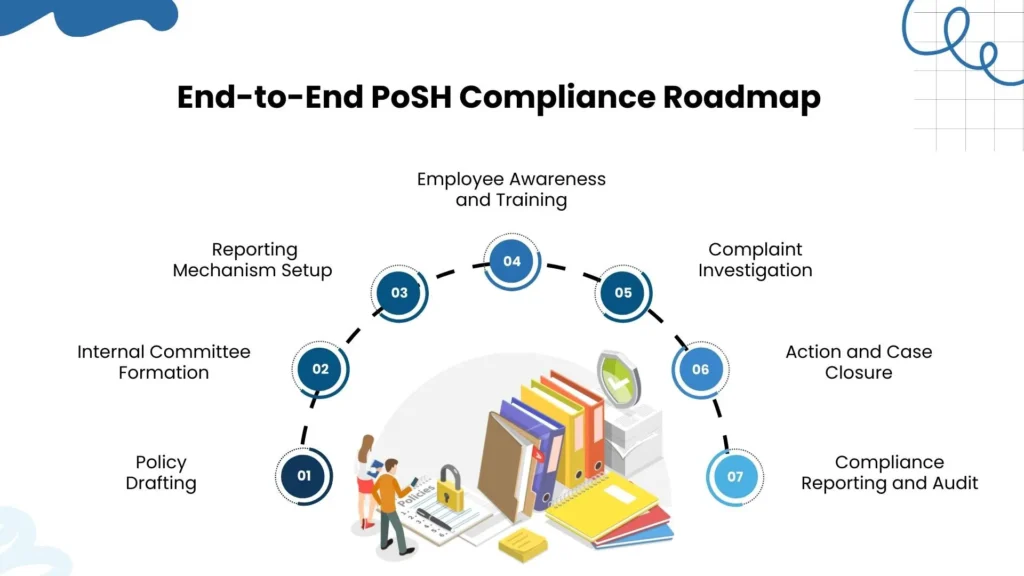
This roadmap helps organizations follow a complete PoSH compliance guide, covering every step from policy drafting to investigation, resolution, reporting, and ongoing improvement, all while staying legally compliant and keeping the workplace safe.
Let Transparian Handle Your PoSH Compliance
From policy drafting and Internal Committee setup to investigations and reporting, Transparian manages complete PoSH Compliance for your organization. As an expert PoSH Consultant, Transparian also provides effective PoSH training for employees, ensuring your workplace remains compliant, safe, and fully prepared.
FAQ’s
Yes, PoSH Compliance in India is mandatory for every organization with 10 or more employees. Such organizations must form an Internal Committee, implement a PoSH policy, and follow complaint redressal and reporting procedures.
The Internal Committee is responsible for receiving complaints, conducting investigations, maintaining confidentiality, and recommending actions. It ensures fair implementation of the PoSH complaint redressal process.
Non-compliance with PoSH Act compliance requirements can result in financial penalties, legal consequences, and reputational damage. Repeat violations may lead to higher fines or business restrictions.
The sexual harassment investigation process workplace typically must be completed within 90 days, followed by submission of the report and implementation of recommended actions within specified timelines.
Yes, PoSH applies to all employees, including remote and hybrid workers. Organizations must ensure their workplace harassment prevention policy India covers virtual work environments and digital interactions.
A PoSH Consultant helps with policy drafting, Internal Committee setup, training delivery, investigation guidance, and compliance audits. This ensures organizations follow a legally aligned PoSH compliance framework.