Workplace complaints related to sexual harassment are often seen only as legal or disciplinary issues. However, in reality, most posh complaints arise due to lack of awareness, blurred boundaries, unintentional behavior, poor communication, or absence of trust in internal systems. This is where posh training for employees plays a critical role, not merely as a compliance requirement, but as a preventive and corrective mechanism that reduces incidents before they escalate into formal complaints.
Effective posh training shifts organizations from reactive complaint handling to proactive behavior management, fostering clarity, accountability, and psychological safety across teams.
How PoSH Training for Employees Reduces Complaints at an Early Stage
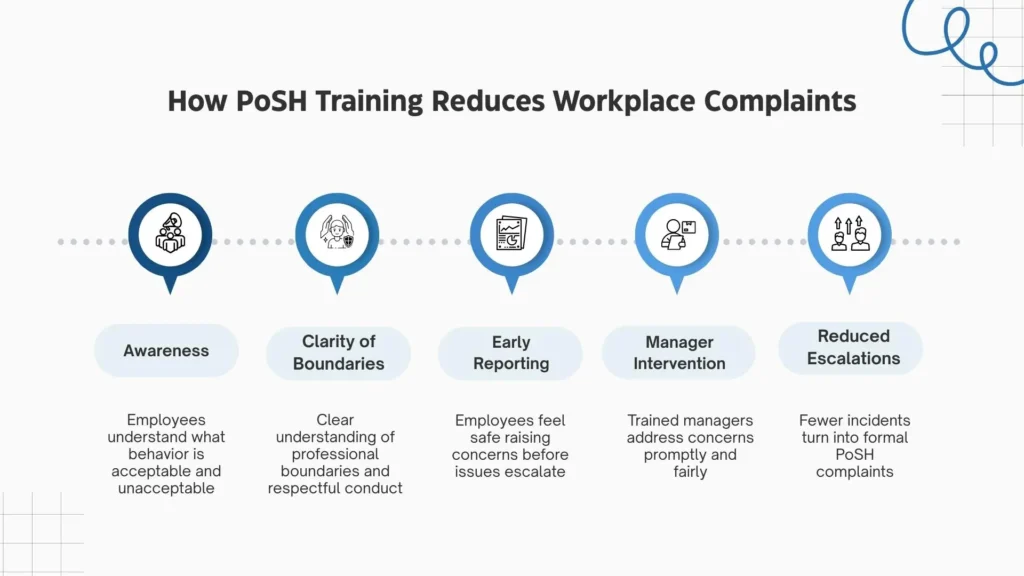
In many organizations, escalation occurs not because policies are missing, but because employees do not fully understand them. Without structured posh awareness training, employees may be unclear about what constitutes inappropriate behavior, how to respond when boundaries are crossed, or whom to approach when something feels uncomfortable. This uncertainty often leads to silence, frustration, or informal conflicts that eventually turn into formal complaints.
This awareness would go a long way in minimizing unintentional harassment at the work place, as this is one of the main causes of complaints. Workers can easily correct themselves when they understand where limits are and therefore they will not engage in problematizing their actions.
How PoSH Training for Employees Prevents Complaints at the Source
Clarifying What Constitutes Harassment
One of the most impactful outcomes of posh training is clarity. Employees learn:
- What behaviors are unacceptable
- Where personal and professional boundaries lie
- How intent does not override impact
By addressing unintentional harassment at workplace scenarios through examples and discussions, employees adjust their daily conduct, significantly reducing incidents that might otherwise lead to complaints.
Encouraging Early Reporting and Informal Resolution
A key topic most organizations overlook is pre-complaint intervention.
Well-designed PoSH Training Programs educate employees on:
- When and how to raise concerns early
- Whom to approach before situations worsen
- How informal reporting can prevent escalation
This understanding reduces fear and hesitation, allowing issues to be resolved before they turn into formal posh complaints.
The Role of Managers in Reducing Escalations
Why PoSH Training for Managers Matters
Complaints escalate faster in environments where managers lack confidence or awareness. posh training for managers equips leaders to:
- Recognize early warning signs
- Respond sensitively to disclosures
- Avoid victim-blaming or procedural delays
- Document concerns appropriately
Managers trained under workplace harassment training frameworks become active preventers rather than passive observers.
Building Accountability at Leadership Levels
When leadership participates in posh workshop sessions, it sends a clear message that respectful behavior is non-negotiable. This visibility:
- Builds employee trust
- Improves confidence in reporting systems
- Reduces repeat offenses
This leadership-driven approach is essential for sustaining inclusive workplace culture and minimizing repeated complaints.
Complaint Reduction Is Not Complaint Suppression
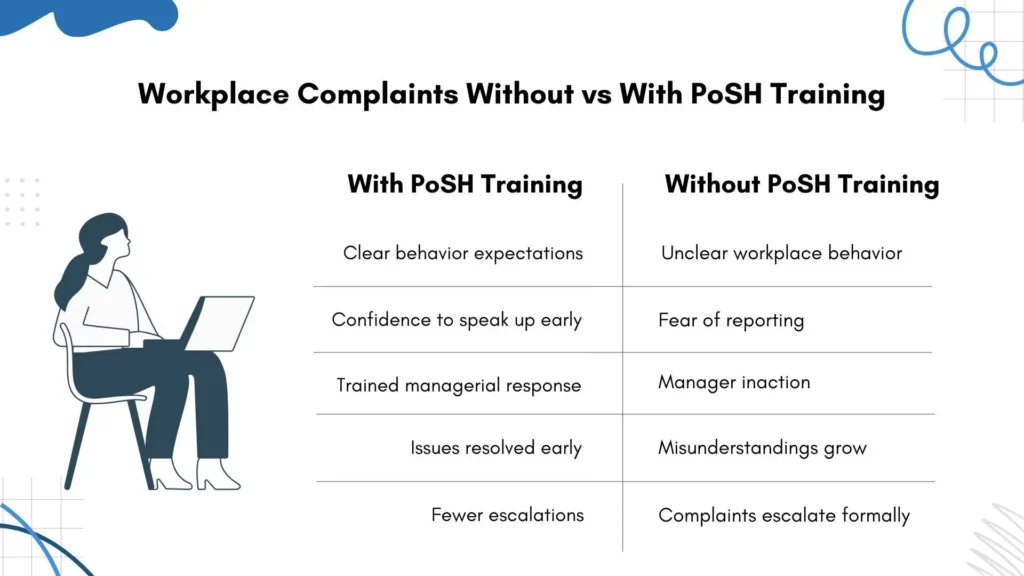
Another crucial difference that a good PoSH compliance appreciates is the difference of fewer complaints and fewer incidents. True complaints get reduced through training which is a change in behavior rather than the discouragement of employees who report. The Structured PoSH Training Programs focus on the importance of reporting being a right and prevention being a collective responsibility.
Employees get heard and supported thus small issues are solved at an early stage before they are developed into cases. This balance can be used to ensure ethical compliance, but at the same time keep things transparent.
Psychological Safety: The Missing Link in Complaint Prevention
How PoSH Training Builds Trust
Employees are less likely to escalate conflicts when they trust systems. Through posh awareness training, organizations create:
- psychological safety at workplace
- Clear expectations of fairness
- Confidence in Internal Committees
When trust exists, employees engage in dialogue rather than confrontation.
Empowering Bystanders to Intervene Early
Most harassment incidents are witnessed, not reported. Advanced PoSH Training Programs include:
- bystander intervention training workplace
- Guidance on safe intervention
- Encouraging peer accountability
This collective responsibility dramatically reduces repeat behavior and escalation.
Addressing Harassment in Modern and Digital Workplaces
With the changing nature of work places, harassment has ceased to be limited to the physical offices. Email messages, WhatsApp messages, internal chat applications, and virtual meetings can have cross-boundaries as well. Updated posh training for employees includes discussions around digital conduct, power dynamics in virtual spaces, and respectful communication in remote settings.
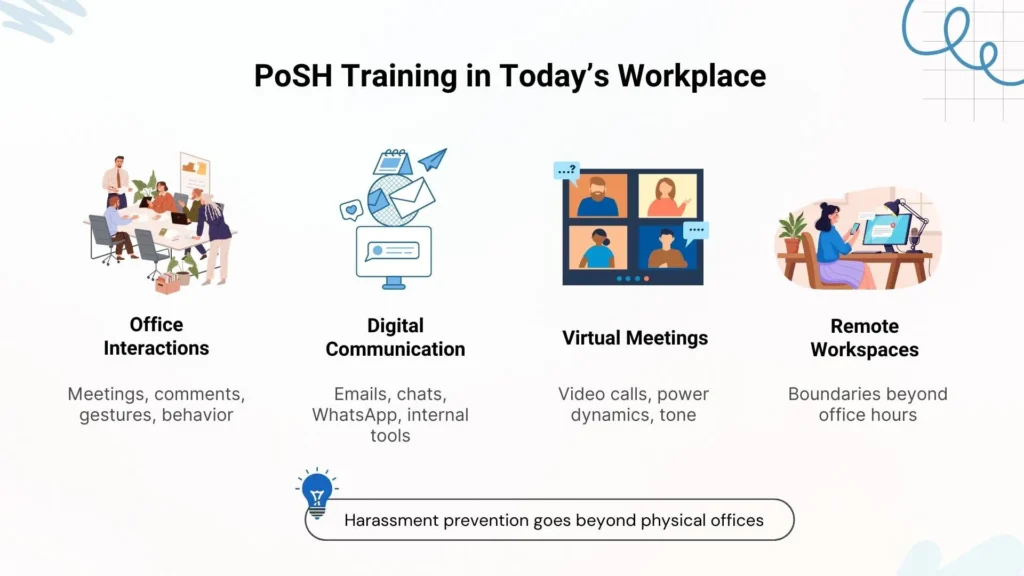
By speaking on the issue of online harassment at the workplace, organizations will minimize a social menace of complaints that is increasingly becoming a common complaint in the conventional training framework.
The Role of Culture in Sustaining Complaint Reduction
Cultural alignment cannot achieve success without training. Posh awareness training, when incorporated in larger values of respect, equity, and accountability, assists in creating a culture of inclusiveness in the workplace where harassment is neither accepted nor overlooked. Employees get to know that proper treatment is not only a rule, but also a commonality.
This cultural transformation over time decreases repetition cases, peer facilitates responsibility, and also enhances interpersonal trust among teams.
Why One-Time Training Fails to Reduce Complaints
One-time training sessions often fail because awareness fades without reinforcement. Organizations that see measurable reduction in complaints typically invest in periodic refreshers, manager-specific sessions, and scenario-based discussions facilitated by an experienced posh consultant.
These ongoing efforts ensure that training evolves with workplace realities, reinforces learning, and translates policy knowledge into everyday behavior.
Creating a Culture That Prevents Complaints Naturally
When posh training for employees is aligned with organizational values, it helps build:
- inclusive workplace culture
- Mutual respect across hierarchies
- Clear communication norms
Employees no longer rely solely on policies; they internalize respectful behavior as a workplace standard.
Turning PoSH Training into a Preventive Strategy
Workplace harassment training is either a preventive or a reactive requirement when handled in a strategic way. Employees are aware of their rights, managers are aware of their duties and the leadership exercises its leadership through an act of relentless doing. The outcome is not silence, but a working environment where problems are solved promptly, in an amicable and productive manner before it becomes too late.
FAQ’s
PoSH training for employees helps people understand acceptable workplace behavior, recognize boundaries, and address concerns early, which prevents misunderstandings from turning into formal complaints.
Yes. Effective posh training focuses on awareness, behavior change, and accountability, which reduces both intentional and unintentional harassment incidents before they occur.
Posh training for managers equips leaders to identify early warning signs, respond appropriately, and resolve concerns sensitively, reducing the need for formal escalation.
Most organizations see better outcomes with annual posh awareness training supported by refresher sessions for managers and new employees.
Yes. Updated workplace harassment training addresses digital communication, online conduct, and virtual power dynamics, reducing complaints in remote and hybrid teams.
Yes. The PoSH Act mandates awareness and sensitization programs to ensure employees understand their rights, responsibilities, and reporting mechanisms.