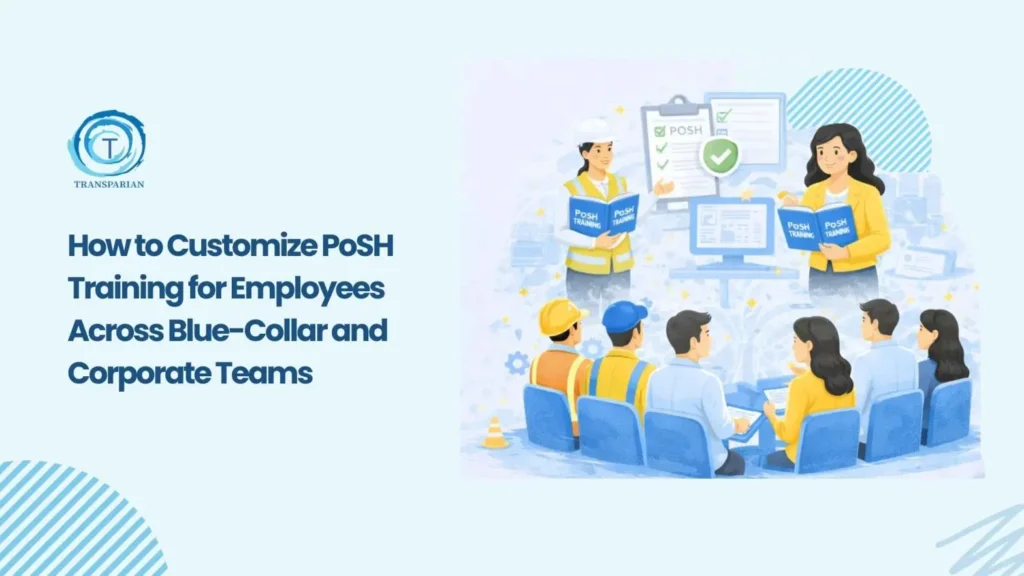
Today’s workplaces are highly diverse, employing corporate professionals, factory workers, field staff, drivers, housekeeping teams, security personnel, and contract workers. Although these groups have different roles, all employees deserve a safe and respectful work environment. This makes PoSH training essential.
The Prevention of Sexual Harassment (PoSH) Act requires organizations to raise awareness, prevent harassment, and provide mechanisms for addressing complaints. However, using the same training format for all employees is often ineffective. Blue-collar and corporate employees have different learning styles, work environments, and communication needs.
To ensure effective PoSH compliance, organizations should tailor their training programs for both office-based staff and blue-collar workers. Customized training improves understanding, strengthens workplace culture, and ensures policies are accessible to all employees.
Understanding the Purpose of PoSH Training
The primary goal of PoSH awareness training is to educate employees about respectful workplace behavior and inform them of available mechanisms to address harassment. It also helps organizations meet legal obligations and promote a culture of dignity and safety.
Effective training ensures employees understand:
- What constitutes sexual harassment
- Their rights and responsibilities at work
- How to report incidents safely
- The role of the Internal Committee in addressing complaints
Beyond legal requirements, training helps build a respectful workplace culture where employees feel safe to voice concerns. Many organizations integrate workplace safety training with PoSH awareness to support employee well-being and ethical conduct.
Why One-Size-Fits-All Training Does Not Work
Traditional training sessions are typically designed for office employees who use computers, communicate by email, and participate in online learning. In contrast, blue-collar workers operate in factories, warehouses, construction sites, and field locations.
These differences create several challenges:
- Different levels of literacy and language proficiency
- Limited access to computers or digital learning platforms
- Work environments that require practical demonstrations instead of presentations
- Cultural differences that influence communication and reporting behaviour
If organizations use the same training for all employees, many may not fully understand the policies. Customizing PoSH training ensures the message is clear and accessible to every employee group.
Understanding the Two Workforce Groups
Before customizing training, organizations should understand the key differences between corporate employees and blue-collar workers.
Corporate Employees
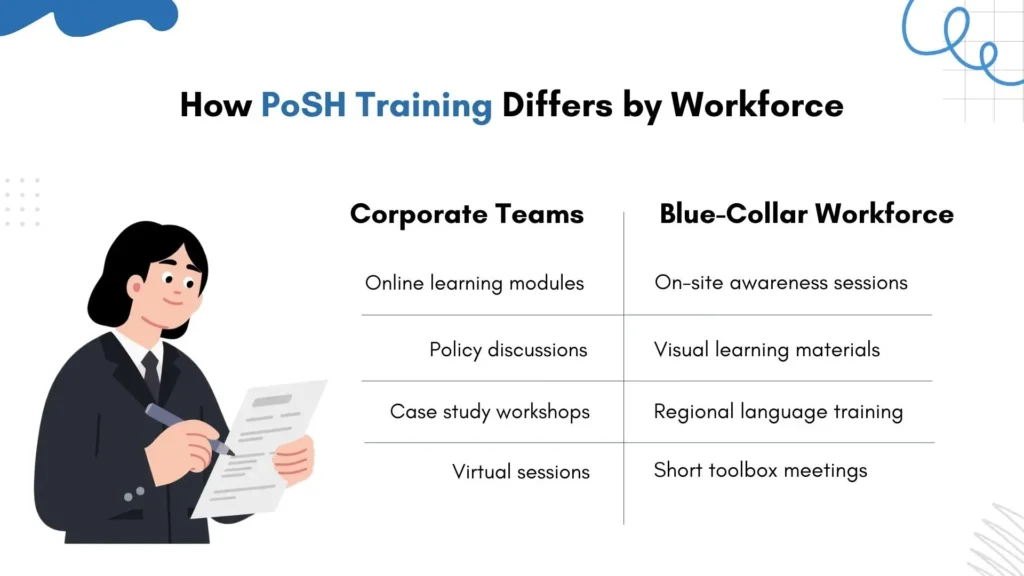
Corporate teams typically work in offices or remote settings and have access to digital communication tools and structured HR policies. Training for these teams can include:
- Online learning modules
- detailed policy explanations
- scenario-based discussions
- interactive workshops
Corporate employees may also face risks such as digital workplace harassment, inappropriate messages, or misconduct during business travel.
Blue-Collar Workers
Blue-collar employees often work in operational environments with limited access to formal training. Examples include manufacturing workers, drivers, technicians, and warehouse staff.
Their training must focus on:
- simple explanations of workplace behavior
- visual learning tools
- practical demonstrations
- multilingual communication
Customising PoSH training for employees for these groups ensures everyone understands their rights and responsibilities, regardless of job role.
Customizing PoSH Training for Corporate Teams
Corporate employees are usually comfortable with structured learning environments and digital tools. Therefore, organizations can design more comprehensive training programs.
Interactive Workshops
Interactive sessions help employees understand policies through discussion and case studies. Trainers can present real-life scenarios to illustrate how harassment may occur in professional settings.
These sessions also allow employees to ask questions and understand the reporting process.
Digital Learning Modules
Many organizations include online modules in their PoSH training programs. Employees can complete these modules at their convenience, which improves participation rates.
Digital training may include:
- videos explaining workplace conduct
- scenario-based quizzes
- policy documentation
These methods reinforce workplace ethics and encourage employees to adopt responsible behaviour.
Leadership Awareness Programs
Managers and senior leaders must understand their responsibilities in preventing harassment. Specialised sessions can help them identify warning signs, handle complaints sensitively, and support affected employees.
Active leadership involvement strengthens employee awareness programs and demonstrates the organization’s commitment to PoSH compliance.
Customizing PoSH Training for Blue-Collar Employees
Blue-collar workforces require a different training strategy, as traditional presentations or lengthy policy documents may not be effective.
Use Simple and Practical Language
Training sessions should avoid complex legal terminology. Instead, trainers should use simple explanations and relatable examples to explain workplace behaviour.
Using regional languages helps employees understand the content clearly and encourages participation.
Visual Learning Methods
Visual communication is one of the most effective methods for blue-collar training. Posters, illustrated guides, and videos can help workers quickly understand acceptable and unacceptable behaviour.
Organizations often use visual aids in PoSH awareness training to reinforce learning across factory floors and operational sites.
Role-Play and Demonstrations
Practical demonstrations show workers how certain situations may arise in real workplaces. Trainers can conduct role-plays to demonstrate appropriate responses to harassment incidents.
This approach supports harassment prevention training and helps workers retain key messages.
On-Site Training Sessions
Instead of formal classroom training, companies can conduct sessions directly at worksites. Short, engaging discussions during shift meetings help ensure training reaches all employees.
On-site programs are an effective way to deliver PoSH training for companies with large operational workforces.
Addressing Language and Cultural Diversity
Large organizations often employ workers from diverse regions and cultural backgrounds. Language barriers can prevent employees from understanding policies or reporting concerns.
Customizing training to include multilingual communication helps organizations create inclusive learning environments. Trainers can deliver sessions in regional languages and use visual examples that are easy to understand.
This approach improves participation in employee safety training and ensures all employees understand workplace expectations.
Including Contract Workers and Third-Party Staff
Many workplaces today rely on contractors, gig workers, and vendor staff. These employees often interact closely with company staff but may not receive formal training.
Organizations must extend PoSH training for employees to include these groups as well. Policies should clearly state that all workers within the workplace environment are protected under harassment prevention guidelines.
Training sessions can include contractors during orientation or periodic PoSH awareness training workshops.
Integrating PoSH Training with Workplace Safety Programs
PoSH training is often more effective when integrated with broader workplace safety training initiatives. This approach emphasises that employee safety includes both physical and emotional well-being.
Combining these topics allows organizations to address:
- respectful workplace behavior
- harassment prevention
- safe reporting mechanisms
- employee dignity and respect
This integrated approach also strengthens compliance training and promotes a culture where employees feel comfortable speaking up.
Measuring the Effectiveness of PoSH Training
Delivering training is only the first step. Organizations must evaluate whether employees truly understand the policies.
Some effective methods include:
Knowledge Assessments
Short quizzes or interactive discussions help determine whether employees understand key concepts from training.
Employee Feedback
Collecting feedback allows organizations to improve future training and address areas where employees need more clarity.
Awareness Surveys
Periodic surveys help organizations measure whether employees feel safe and informed about reporting procedures.
Monitoring these indicators helps organizations refine their PoSH training program and maintain strong PoSH compliance practices.
The Role of a PoSH Expert in Designing Training Programs
Developing effective training programs often requires specialised knowledge of legal requirements and workplace dynamics. Many organizations work with a PoSH consultant who can design customized sessions for different workforce groups. A professional consultant can help with:
- designing training modules for corporate and blue-collar employees
- developing policy documents and awareness materials
- training Internal Committee members
- ensuring legal compliance with the PoSH Act
Working with experts ensures organizations deliver training that is both legally compliant and practical for workplace environments.
Building a Culture of Respect Through Continuous Training
PoSH training should not be treated as a one-time compliance activity. Regular awareness programs help reinforce respectful workplace behaviour and ensure that new employees receive the same information.
Companies that conduct frequent PoSH awareness training often see improvements in employee engagement, workplace transparency, and overall organizational culture.
Continuous learning initiatives, visual reminders, and open communication channels strengthen awareness across both corporate and blue-collar teams, supporting long-term workplace dignity.
Customizing PoSH training for employees across workforce groups enables organizations to create inclusive, accessible, and effective learning experiences. By adapting training methods, using clear communication, and integrating awareness programs with workplace safety training, companies can ensure every employee understands their rights, responsibilities, and the importance of a respectful workplace.
FAQ’s
Yes, PoSH training is mandatory under the PoSH Act 2013. Organizations must conduct posh awareness training to ensure employees understand harassment policies, reporting procedures, and their rights at the workplace.
Companies can customize training by using simple language, regional communication, visual examples, and short on-site sessions. These approaches make posh training for companies more accessible for factory workers, warehouse staff, and field employees.
A typical posh training program covers workplace harassment definitions, acceptable behavior, reporting mechanisms, Internal Committee roles, employee rights, and preventive workplace practices.
PoSH training helps employees understand respectful behavior and reporting procedures. It also supports broader workplace safety training initiatives by promoting dignity, equality, and harassment prevention.
HR teams are responsible for organizing PoSH traning for employees, coordinating with trainers or consultants, maintaining records, and ensuring the organization meets legal PoSH compliance requirements