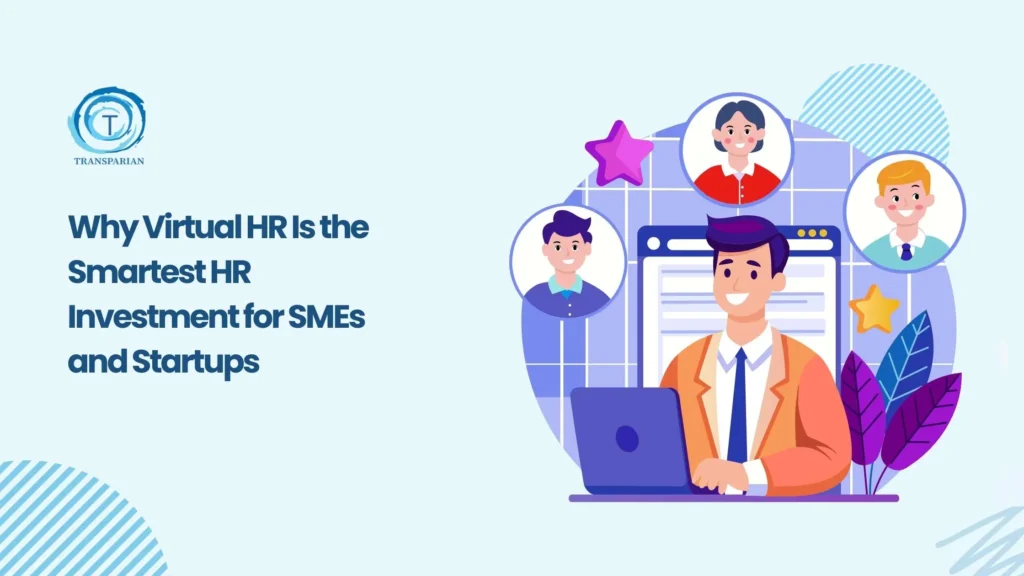
For most SMEs and startups, the biggest challenge isn’t finding customers, it’s managing people, processes, and compliance without slowing down growth. Traditional HR models demand a full-time team, fixed salaries, physical presence, and large operational costs. But today’s founders want agility, lean operations, and on-demand expertise without the overhead. This is exactly where Virtual HR has emerged as the smartest, most cost-effective HR investment for growing businesses.
Virtual HR goes beyond basic payroll or employee support. It offers strategic direction, HR skills at the leadership level as well as high technology that enables businesses to handle people easily whilst remaining within the legal limit, scalable, and prepared to expand in the future. It is an outsourced HR department operating remotely, dealing with both strategy and day-to-day operations as well as offering on-demand access to capabilities that small teams usually find difficult to procure.
Although the most debates focus on the cost-efficient and flexibility of remote HR, there are much deeper advantages that remain largely undiscussed benefits that can radically transform how SMEs attract talent, performance management, and operate in the long term.
Why SMEs and Startups Are Rapidly Shifting to Virtual HR
Early-stage companies often reach a point where HR responsibilities pile up beyond what founders or office managers can handle. The processes of hiring, onboarding, payroll, compliance, documentation and culture building require constant attention. However, it is not economically viable to hire a full-time CHRO or HR team in the initial years.
It is this increasing divide that has led to the Virtual HR solutions as a perfect in-between, a means to tap into senior knowledge, processes, and contemporary technology in HR without heavy investment.
Virtual HR teams provide:
- Strategic HR leadership
- Daily HR operations
- Policy creation and compliance
- Talent hiring and onboarding
- Performance systems
- Engagement programs
- Payroll and statutory support
- Culture building and training
This gives SMEs access to advanced HR capabilities once reserved only for large enterprises.
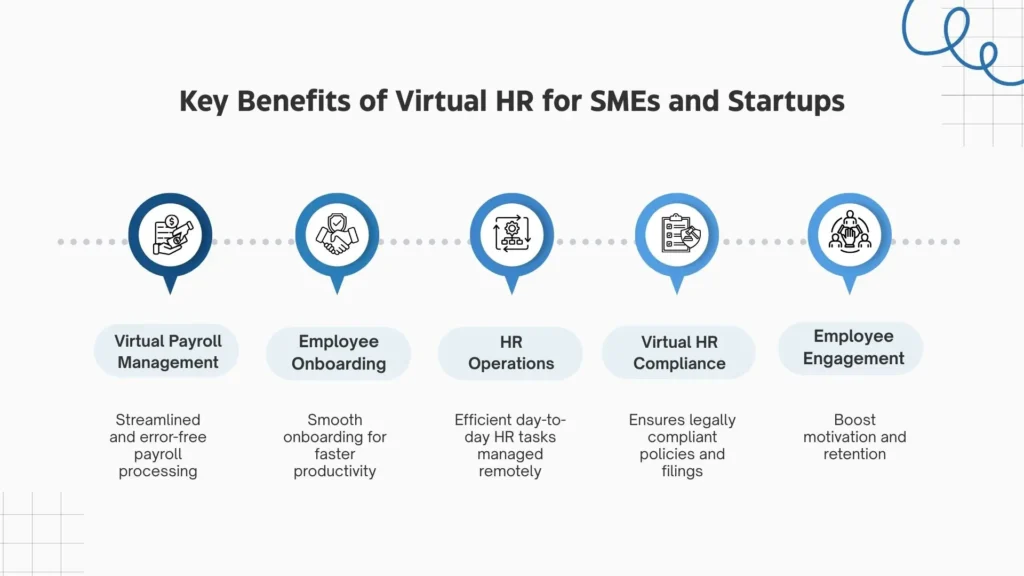
Leadership Without the Salary Burden: The Rise of the Fractional CHRO
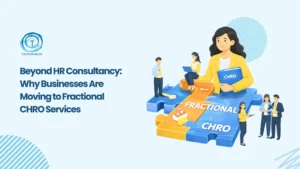
One of the most powerful aspects of Virtual HR is access to a Fractional CHRO, an experienced HR leader who works part-time but delivers full-scale strategic guidance. For startups, this is game-changing.
The high attrition rate, the lack of job description, poor performance evaluation, outdated policies or poor recruitment of the right talent are some of the problems that many businesses are grappling with. A fractional leader offers the same competence as a full-time CHRO, but he does it at a fraction of the price. They influence HR strategy, develop scalable structures and make sure that your people processes are matched to your business objectives.
This is in addition to the execution layer introduced by the Virtual HR teams and forms a collaboration as strategy and execution proceed side by side.
Fixing What Founders Struggle With: The Real Problems Virtual HR Solves
SMEs commonly face hidden HR gaps that never surface until they cause damage, compliance penalties, misaligned teams, hiring delays, disengaged employees, or poor documentation. Virtual HR eliminates these risks by bringing structure, legal accuracy, and operational excellence from day one.
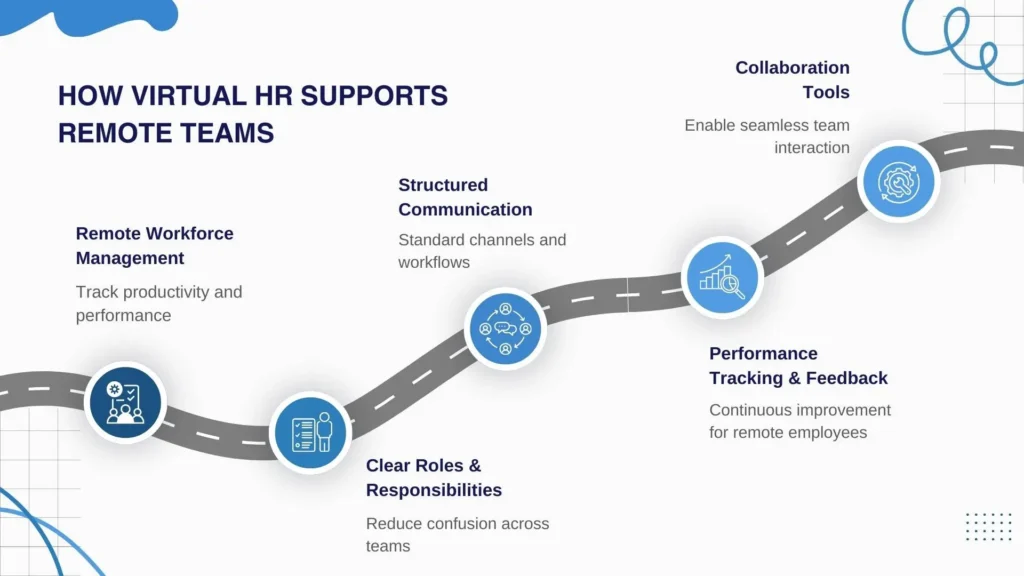
1. Virtual Team Setup and Management
Remote and hybrid workforces have become the norm, but without structure, they lead to confusion and miscommunication. Strong virtual team management solves this through:
- Remote workflows
- Daily/weekly operating rhythms
- Role clarity
- Accountability systems
- Virtual collaboration norms
This enables a distributed workforce to stay aligned and productive.
2. Accurate and Hassle-Free Payroll
Payroll mistakes cost time, penalties, and employee trust. With Virtual payroll management, SMEs get:
- Automated salary processing
- Statutory compliance
- Leave and attendance tracking
- Error-free payouts
- Monthly reporting
This shifts payroll from a manual pain point to a smooth, predictable process.
3. Seamless, Professional Employee Onboarding
Most small companies onboard employees through informal methods, leading to poor employee experience and early attrition. Structured employee onboarding includes:
- Pre-boarding
- Role-wise orientation
- IT & access setup
- Culture introduction
- 30/60/90-day plans
This improves retention, productivity, and brand perception.
4. Real HR Operations Without Building an In-House Team
Founders often underestimate how much time HR tasks consume. With HR operations handled remotely, everything from attendance to grievances to exit formalities runs smoothly without adding internal headcount.
Virtual HR Also Solves What Most People Don’t Talk About
Beyond basic tasks, Virtual HR covers advanced areas that many SMEs miss entirely:
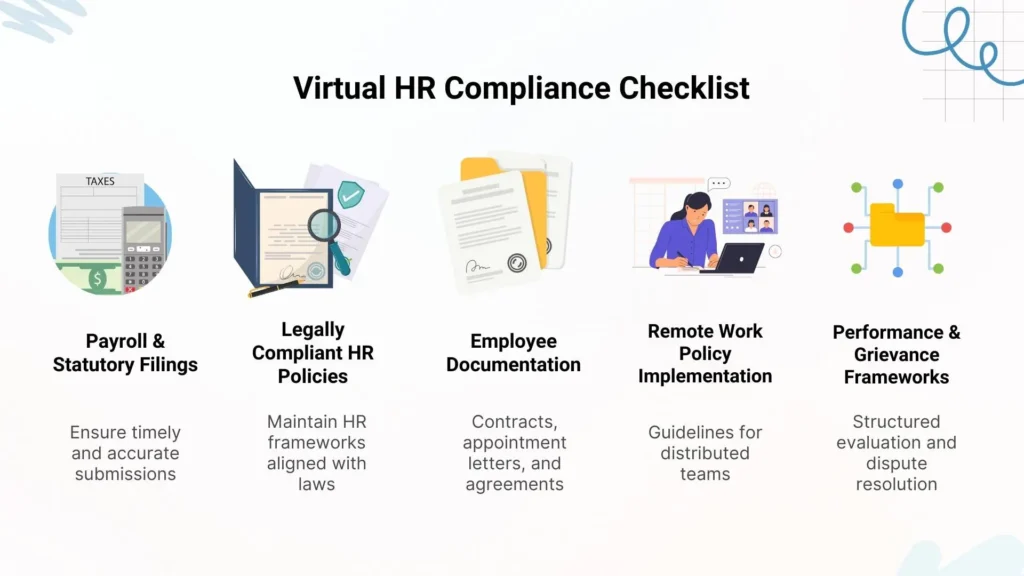
1. Policies and Documentation That Protect the Business
Most small companies lack updated HR documentation, which leads to disputes, miscommunication, and legal trouble. Virtual HR ensures:
- Offer letters
- Appointment contracts
- Remote work policies
- POSH compliance
- Performance frameworks
- HR manuals
- Grievance redressal systems
Structured HR documentation and policies reduce risk and improve transparency.
More importantly, every document aligns with legally compliant HR policies, preventing legal exposure during audits or disputes.
2. Compliance Without Fear
Compliance is one of the most complex responsibilities for SMEs. Virtual HR eliminates uncertainty with virtual HR compliance, covering:
- PF & ESIC
- Shops & Establishment
- Leaves & working hours
- Gratuity
- Bonus rules
- Contract labour compliance
- Payroll statutory filings
This protects the business from fines and ensures smooth operations across states.
3. Employee Engagement That Actually Works
Engagement isn’t about festivals or birthday emails. Engagement is about creating consistent employee engagement initiatives that improve motivation, performance, and culture.
Virtual HR enables:
- Surveys & insights
- Recognition programs
- Pulse checks
- Manager capability building
- Communication rhythms
These initiatives strengthen workplace culture even in distributed teams.
A Technology-Driven Model: HR Digital Transformation for Growing Businesses
Modern HR has made use of technology as a mainstay, particularly in the case of SMEs and startups that require scalability, but not an increase in staff numbers. Virtual HR allows full digital transformation of HR by incorporating cloud-based solutions, which automate routine operations, improve communication and give real time access to data about employees.
These are digital onboarding journeys, automated payroll and compliance workflows, performance dashboards and employee self-service systems. These tools eradicate manual labor, minimize mistakes in operations, and provide leaders with the information they require to make the decisions related to people fast and accurately. Going to a digital HR ecosystem can help the business have smoother processes and increased accuracy with a massive ability to manage an expanding team.
Supporting Distributed and Hybrid Teams with Remote Workforce Management
As companies expand across multiple cities, states, or countries, managing people remotely becomes one of the biggest operational challenges. This is addressed by Virtual HR by providing well-organized systems of remote labor management that outlines the communication patterns, documentation criteria, performance demands and systems of distributed teams productivity.
It ensures every team member regardless of location works with clarity, accountability, and seamless collaboration. Through the creation of workflows, visibility of projects and team alignment practices, Virtual HR assists businesses to scale their workforce with high confidence without the geographical constraints that characterize traditional HR models.
What People Are Asking And How Virtual HR Answers Them
Founders often feel overwhelmed by questions related to HR structure, compliance, culture, and team management, especially when they don’t have an in-house HR leader. Virtual HR answers these questions by providing ready-made systems, senior expertise, and legally aligned frameworks that address concerns such as managing remote employees, building a strong culture, reducing attrition, preventing compliance issues, and hiring or onboarding at scale. Instead of piecing together solutions or firefighting HR problems, SMEs get a unified, strategic model that handles everything from policies and documentation to employee engagement and leadership support making HR predictable, efficient, and growth-ready.
FAQ’s
Virtual HR provides remote HR support including strategy, payroll, compliance, and employee management, helping SMEs scale without hiring a full in-house team.
It eliminates the need for full-time HR staff, offers fractional CHRO expertise, and automates payroll, onboarding, and HR operations efficiently.
Yes, Virtual HR supports remote workforce management through structured workflows, performance systems, and communication practices to keep distributed teams aligned.
Through virtual HR compliance services, SMEs receive legally compliant HR policies, payroll adherence, statutory filings, and guidance on employment laws.
Virtual HR integrates digital tools for HR operations, payroll automation, onboarding systems, and performance dashboards, creating a modern, tech-driven HR ecosystem.
Yes, it’s ideal for startups needing professional HR guidance, virtual team management, and operational efficiency without hiring a full in-house team.