Manufacturing businesses in India operate in a highly regulated environment. Compliance with safety standards, labour laws, environmental approvals, and digital filings is essential for uninterrupted operations. However, many factory owners find it challenging to understand the requirements, applicable laws, and how to establish a structured compliance system.
This guide addresses common questions from business owners, plant heads, HR leaders, and compliance officers about Factory Compliance. It also highlights areas often missed in standard checklists.
What Is Factory Compliance in India?
Factory Compliance in India means adhering to all laws and regulations governing manufacturing units, including safety, health, welfare, labour, environmental, and operational requirements set by central and state authorities.
The legal backbone of factory regulation has historically been the Factories Act, 1948, which lays down provisions relating to worker safety, hygiene, working hours, machinery safeguards, and welfare facilities. More recently, the Occupational Safety, Health and Working Conditions Code, 2020 has consolidated multiple labour laws, reshaping how occupational safety and working conditions are regulated.
Compliance is an ongoing process. It involves obtaining licenses, maintaining statutory registers, filing periodic returns, preparing for inspections, and consistently meeting workplace safety standards.
Who Needs Factory Registration?
One of the most frequently asked questions is: Is factory registration mandatory?
Under applicable labour laws, any premises where:
- 10 or more workers are employed with power, or
- 20 or more workers are employed without power
must obtain factory registration and a valid factory license.
The factory registration process requires submitting layout plans, safety measures, machinery details, and worker information to the local labour department. Periodic renewal is necessary to avoid penalties or shutdowns.
Core Areas of Statutory Compliance for Manufacturing Units
Manufacturing businesses must address several key areas of statutory compliance:
1. Licensing and Registration
- Factory license application and renewal
- Approval of building plans
- Amendments in case of expansion
2. Health and Safety Provisions
- Ventilation and temperature control
- Dust and fume management
- Machinery guarding
- Personal protective equipment
- Lighting and sanitation
These provisions are central to factory safety compliance and are closely monitored during inspections.
3. Working Hours and Leave Compliance
- Adherence to working hour limits
- Overtime wage calculations
- Weekly off compliance
- Leave with wages records
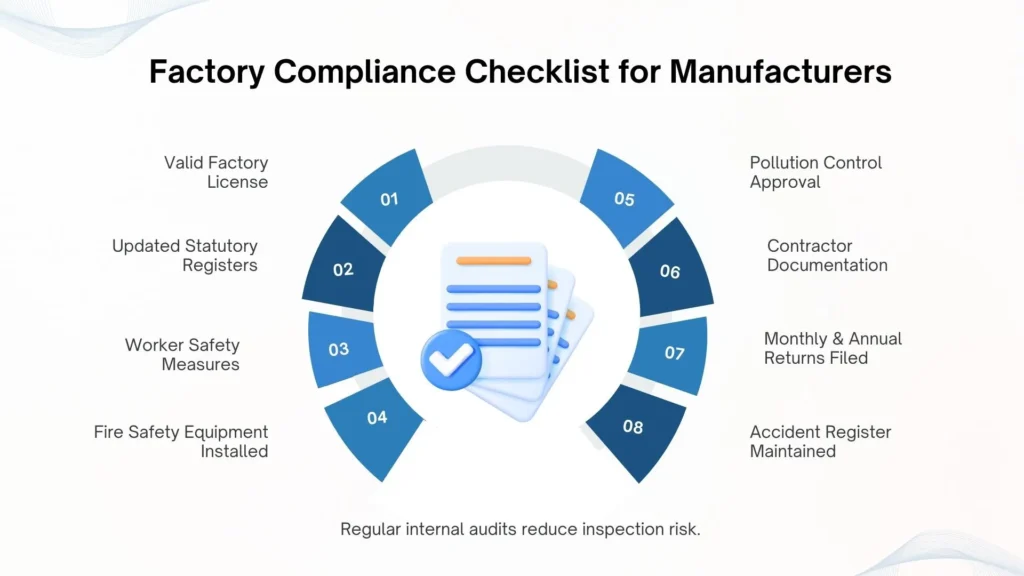
4. Maintenance of Statutory Registers
Manufacturers must keep updated statutory registers, including:
- Muster roll
- Register of adult workers
- Overtime register
- Accident register
Failure to maintain proper documentation is a common compliance gap identified during inspections.
Labour Law Integration in Factory Compliance
Many business owners view factory compliance and labour compliance as separate, but both are closely interconnected.
Manufacturing units must also comply with:
- Provident Fund regulations
- ESIC requirements
- Payment of wages and minimum wage compliance
- Bonus and gratuity laws
An integrated approach ensures seamless labour law compliance and reduces the risk of penalties.
Fire Safety and Local NOC Requirements
Fire safety compliance is often underestimated. Obtaining a valid Fire NOC from the local fire department is mandatory for many industrial establishments.
Key requirements include:
- Fire extinguishers and hydrant systems
- Emergency exit plans
- Fire drills and evacuation training
- Electrical safety inspections
Failure to obtain a Fire NOC can result in severe penalties and operational closures.
Hazardous Process and Chemical Compliance
Factories involved in chemical, pharmaceutical, paint, or heavy engineering manufacturing must comply with additional hazardous process regulations.
This includes:
- Safe storage of chemicals
- Material Safety Data Sheets (MSDS)
- Hazardous waste disposal approvals
- Environmental clearance
Understanding hazardous process compliance under the Factories Act is critical for industries handling toxic or flammable substances.
Environmental and Pollution Control Approvals
Manufacturing businesses must secure:
- Consent to Establish (CTE)
- Consent to Operate (CTO)
- Pollution control board approvals
- Waste management permissions
Environmental regulations are increasingly tied to sustainability standards and industrial compliance, especially for export-oriented units.
Digital Compliance and Government Portals
The government has digitized many compliance processes through platforms like Shram Suvidha.
Factories must:
- Obtain Labour Identification Number (LIN)
- File unified returns online
- Track inspection notices digitally
A structured compliance calendar helps manufacturing companies avoid missing deadlines.
Contractor and Principal Employer Responsibilities
Modern factories often rely on contract labour, but many businesses overlook their responsibilities as the principal employer.
Responsibilities include:
- Ensuring contractor registration
- Verifying wage payments
- Monitoring statutory deductions
- Maintaining contractor compliance documentation
Poor contractor oversight can lead to direct liability for the factory owner.
Factory Inspection and Audit Readiness
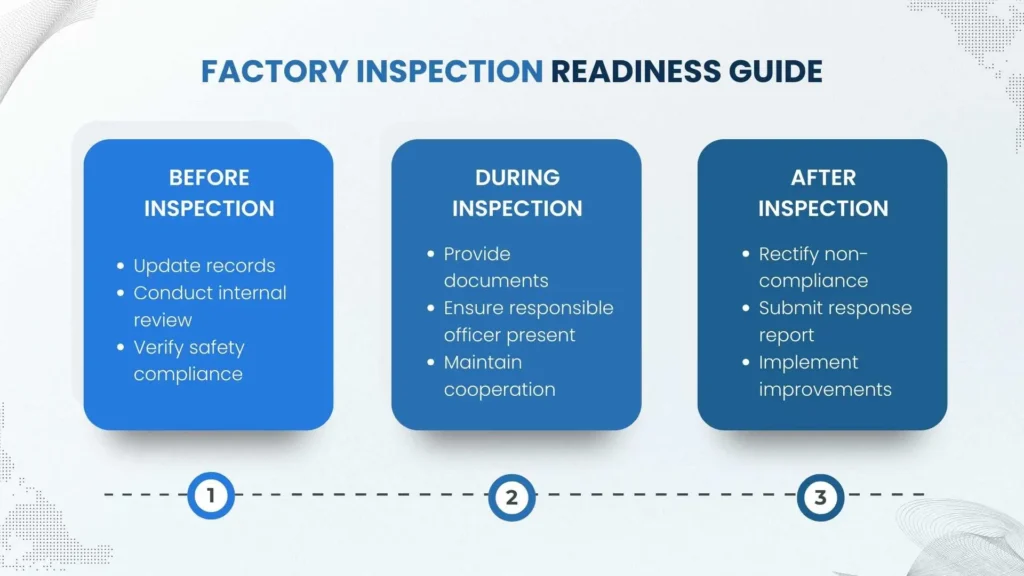
Inspection preparedness is a major concern, as authorities may conduct surprise or scheduled inspections.
To prepare for a factory compliance audit, businesses should:
- Maintain updated registers
- Ensure safety signage is visible
- Conduct internal compliance reviews
- Train supervisory staff
Conducting internal compliance risk assessments helps identify weaknesses before official inspections.
State-Wise Variations in Enforcement
While central laws provide the framework, enforcement practices vary across states. Licensing timelines, inspection frequency, and documentation requirements can differ.
Understanding state-specific factory compliance rules is essential for businesses with multiple locations. Partnering with a PAN India compliance agency is especially valuable for manufacturers operating in different states.
Building a Compliance Culture, Not Just a Checklist
Many businesses view compliance as paperwork, but sustainable Factory Compliance requires building a compliance culture.
This includes:
- Regular worker safety training
- Leadership accountability
- Periodic safety audits
- Transparent reporting systems
Proactive compliance reduces workplace accidents and improves operational efficiency.
Industry-Specific Compliance Considerations
Compliance requirements differ significantly by industry:
- Food manufacturing units must comply with food safety and hygiene regulations.
- Pharmaceutical factories must meet stringent quality and storage norms.
- Chemical plants must follow hazardous material handling rules.
- Textile and engineering units must manage machinery safety and worker exposure risks.
Industry-specific manufacturing compliance requirements often go beyond general factory guidelines.
Penalties for Non-Compliance
Non-compliance can lead to:
- Heavy monetary fines
- License suspension
- Criminal liability for directors
- Factory closure
Penalties under the Factories Act and labour codes are becoming stricter, increasing accountability.
Why Businesses Seek Professional Compliance Services
Due to the complexity and evolving regulations, many manufacturing companies rely on professional compliance services to manage filings, audits, and documentation.
A structured approach typically includes:
- Monthly compliance monitoring
- Digital record management
- Audit preparation support
- Multi-state compliance handling
Engaging a specialized PAN India compliance agency ensures consistent compliance standards across locations and reduces operational risk.
Technology and the Future of Factory Compliance
Technology is transforming compliance management, and many factories are adopting:
- Digital compliance dashboards
- Automated reminders for license renewals
- Cloud-based document storage
- Integrated payroll and statutory systems
A centralized system increases transparency and simplifies statutory compliance tracking.
A Structured Approach to Factory Compliance in India
Effective Factory Compliance management in India requires:
- Understanding applicable laws
- Maintaining accurate documentation
- Monitoring compliance deadlines
- Preparing for inspections
- Leveraging professional expertise when needed
When approached strategically, Factory Compliance becomes more than a regulatory obligation; it serves as a framework for safer workplaces, operational discipline, and sustainable industrial growth.
Manufacturers that prioritize structured compliance, digital systems, safety training, and multi-location coordination are better positioned for long-term success in India’s evolving industrial landscape.
For businesses seeking Manufacturing Factory Compliance Support, Transparian delivers structured, end-to-end assistance to help your unit remain compliant, inspection-ready, and operationally secure across every stage of growth.
FAQ’s
Yes, factory registration is mandatory if the unit employs 10 or more workers with power or 20 or more workers without power.
Common documents include layout plans, machinery details, worker information, identity proof of occupier, and prescribed application forms submitted to the labour department.
Factory license renewal frequency varies by state, but it is typically renewed annually or for a specified multi-year period as per state regulations.
Key statutory compliance areas include factory licensing, maintenance of statutory registers, labour law compliance, safety standards, environmental approvals, and periodic returns filing.
Non-compliance can result in penalties, fines, suspension of license, legal action against management, or even closure of the factory.
Businesses operating in multiple locations should maintain a centralized compliance system and may consider professional compliance support to ensure consistent adherence to state-specific regulations.