
Attrition has become one of the biggest HR pain points of 2025. A recent SHRM India study notes that over 38% of mid-size organizations state that their turnover rates are higher than pre-pandemic and especially in tech, sales, and operations positions. The issue is not only on people leaving, but also the reasons why they leave.
Often, the issue begins long before an employee’s exit, it starts at the hiring stage. Poor job-role alignment, lack of expectations, and weak cultural fit are factors that lead to early exit, and the companies lose precious time and resources. In response, the HR leaders are reevaluating the way recruitment is supposed to work as not a temporary tool, but rather a retention tool.
A strong recruitment strategy 2025 aligns hiring with long-term retention goals. By integrating analytics, technology, and cultural fit, organizations can reduce attrition rates, improve engagement, and build a sustainable workforce transforming recruitment from a cost function into a competitive advantage.
Why Recruitment Strategy Impacts Attrition
Recruitment and retention are two sides of the same coin. In the case of hiring that is only concerned with filling the vacancies, organizations are likely to suffer long term instability. According to a study of the LinkedIn 2025 Workforce Report, 41% of voluntary exits happen within the initial 12 months, primarily caused by wrong expectations at work or lack of role clarity.
A good talent acquisition strategy assures new employees of being able to conform to corporate and organizational culture, values, and growth opportunities. Applicants who are aware of the mission of the company and have a clear career ladder will be more likely to remain active.

Key factors connecting recruitment and attrition include:
- Cultural fit: Employees who share organizational values show 30% higher engagement.
- Realistic job previews: Honest communication during hiring reduces early attrition by 25%.
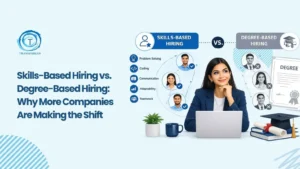
- Skill-based hiring: Aligning technical and behavioral competencies to long-term goals prevents mismatch-driven exits.
In essence, a thoughtful hiring framework doesn’t just find talent, it builds commitment.
Key Ingredients of an Effective Recruitment Strategy in 2025

1. Employer Branding and Employee Value Proposition (EVP)
Today’s candidates choose employers the way customers choose brands. The strong employer brand and a well-defined EVP conveys what the company is about culture, purpose and experience. A Gartner 2025 survey found that companies with a clear EVP see 50% more qualified applicants and 30% lower turnover.
2. Data-Driven Hiring and Predictive Analytics
The era of guesswork in hiring is over. Recruitment analytics is now providing organizations with insight into the cause of retention. Predictive tools help HR leaders forecast candidate success, identify attrition risks, and benchmark top performer traits.
With workforce data, HR teams can be proactive and identify recruitment shortfalls and develop pipeline on strategic positions, making reactive hiring a strategic science.
3. AI-Driven Assessments for Skill Verification
Advanced HR tech for recruitment has made it easier to measure not just what candidates know, but how they’ll perform. Simulations and psychometric testing based on AI analysis tests in the real world, decision-making, teamwork and leadership potential, assist companies in making hiring choices based on data.
With tech-enabled testing, human bias is also reduced, and therefore, the recruitment process is fairly and more diverse.
4. Diversity and Inclusion as Retention Drivers
Diverse teams outperform homogenous ones in innovation and problem-solving. Diversity in 2025 is not only an ethical obligation, but it will be a retention strategy. Applicants will be attracted to inclusive companies where different views are honored. Application of DEI principles in recruitment pipelines makes the teams more resilient and powerful.
5. Structured Onboarding and Probation Support
The 90 days of the employee may mean the difference between the long-term commitment of the employee. A structured onboarding program that blends mentorship, role clarity, and engagement touchpoints can reduce early attrition by up to 40%. Regular feedback loops during probation ensure employees feel guided and valued from day one.
Leveraging HR Tech to Improve the Recruitment-Retention Nexus
Technology is now the backbone of modern recruitment. AI and automation are assisting businesses in terms of individualizing the hiring experience and enhancing engagement after a job has been obtained.
- AI-powered Applicant Tracking Systems (ATS) streamline candidate sourcing, ensuring only the best fits progress to interviews.
- Onboarding automation tools help HR teams deliver consistent employee experiences, improving retention from the start.
- Chatbots and candidate experience platforms engage applicants through real-time updates, keeping communication transparent.
The 2025 has also introduced a change of AI-supported DEI reporting and predictive retention tools. With these technologies incorporated, the HR leaders will have the ability to correlate pre-hiring information with the post-hiring results, which is a primary driver of HR transformation.
When used effectively, HR tech for recruitment becomes more than an efficiency booster; it becomes a strategic partner in reducing attrition and improving employee lifetime value.
Metrics and KPIs to Track Recruitment Success
You have no idea how you could make something better without measuring it. A successful recruitment strategy relies on clear, measurable outcomes that reflect both hiring efficiency and retention quality.
Key Metrics to Track:
- First-year attrition rate: Percentage of employees leaving within 12 months, a strong indicator of hiring effectiveness.
- Quality of hire: Combines performance ratings and cultural fit to measure long-term impact.
- Hiring velocity: Time taken to fill key roles without compromising candidate quality.
- Offer-to-join ratio: Reflects employer reputation and candidate experience.
The report by Deloitte 2025 HR Analytics showed that organizations that regularly measure these metrics cut attrition caused by hiring by 27% within a year. On-going feedback and analytics-based audits seal the gaps in the recruitment and retention outcomes.
Real-World Examples and Industry Trends
Several industries are already redefining hiring frameworks to improve retention.
In the IT services sector, companies use predictive analytics and AI tools to identify “flight risk” candidates before hiring. For example, leading Tech Recruitment Agencies have reported up to 22% improvement in long-term retention using AI-driven matching algorithms.
Startups are focusing on culture-based hiring emphasizing mission alignment and growth potential. Meanwhile, established organizations are partnering with recruitment agencies and staffing services that specialize in data-backed sourcing and skill-based assessments.
This approach reflects a shift in mindset: recruitment is no longer transactional; it’s transformational.
Actionable Takeaways: 5-Step Checklist to Build a Retention-Focused Recruitment Strategy

- Audit your current hiring data: Identify early attrition trends and their root causes using recruitment analytics.
- Define your EVP and culture DNA: Align hiring communication with internal values to attract right-fit candidates.
- Adopt AI and predictive tools: Leverage HR tech for recruitment to assess skills, culture fit, and engagement potential.
- Enhance onboarding experience: Create a structured 30-60-90 day integration plan with mentorship and check-ins.
- Monitor KPIs consistently: Measure success through first-year attrition, offer-to-join ratio, and quality-of-hire analytics.
This checklist can help HR leaders design a recruitment ecosystem that doesn’t just fill vacancies but strengthens the organization’s long-term stability.
Conclusion
In 2025, hiring challenges have become more complex, but so have the tools to solve them. A strong recruitment strategy 2025 blends technology, analytics, and empathy to create an ecosystem where employees feel valued from day one.
By aligning effective talent acquisition with a proactive employee retention strategy, organizations can reduce attrition rates and drive sustained business performance.
For best results, HR leaders should audit their processes, leverage modern tools, and seek expert guidance to unlock the full value of strategic recruitment. Start today, your future workforce depends on it.
FAQ’s
A strong recruitment strategy ensures candidates are aligned with company culture, expectations, and career goals, which helps reduce attrition rates and improve employee engagement.
Key causes include poor job-role alignment, lack of growth opportunities, skill mismatch, weak onboarding, and ineffective employee retention strategies.
Focus on data-driven hiring, clear employee value propositions (EVP), AI-based assessments, and structured onboarding programs that enhance retention and engagement.
Strong employer branding communicates trust, culture, and career growth, attracting candidates who are more likely to stay, thereby enhancing long-term retention.
The top hiring challenges 2025 include talent scarcity, skill evolution, retention of Gen Z employees, and balancing hybrid work expectations with company culture.