
The role of HR leadership has changed dramatically. Organizations today are not just managing people, they are managing risk, culture, performance, compliance, and growth simultaneously. As business models become leaner and workforces more distributed, companies are questioning whether a traditional full-time CHRO model is the only or even the best way forward. This shift has accelerated the adoption of CHRO services delivered through Fractional CHRO and Virtual HR models.
CHRO services on demand provide organizations with senior HR leadership that is flexible, strategic, and execution-focused without the long-term commitment and cost structure of a permanent hire.
Understanding CHRO Services on Demand
At its core, CHRO services on demand offer access to experienced HR leaders who operate at the executive level but engage on a part-time, project-based, or virtual basis. These models include outsourced CHRO engagements and fully Virtual HR leadership, depending on organizational needs.
Unlike traditional HR consulting, this approach embeds leadership into the business. The CHRO is accountable for outcomes, not just recommendations. Organizations benefit from deep expertise across HR operations, people strategy, compliance, and transformation initiatives delivered exactly when required.
Why Organizations Are Shifting Away from Full-Time CHRO Roles
Many growing organizations face a leadership paradox. They need strategic HR direction but cannot justify or sustain a full-time executive role. This is especially true for startups, SMEs, and scaling companies navigating funding cycles, rapid hiring, or restructuring.
Fractional CHRO models solve this challenge by aligning cost with value delivered. Businesses gain access to seasoned leaders who have managed scale, compliance complexity, and workforce transformation across multiple environments. The result is senior-level guidance without unnecessary overhead.
Strategic HR Leadership Beyond Day-to-Day Operations
A key advantage of CHRO services on demand is the ability to elevate HR beyond administration. While internal HR teams often focus on transactions, senior HR leaders focus on alignment.
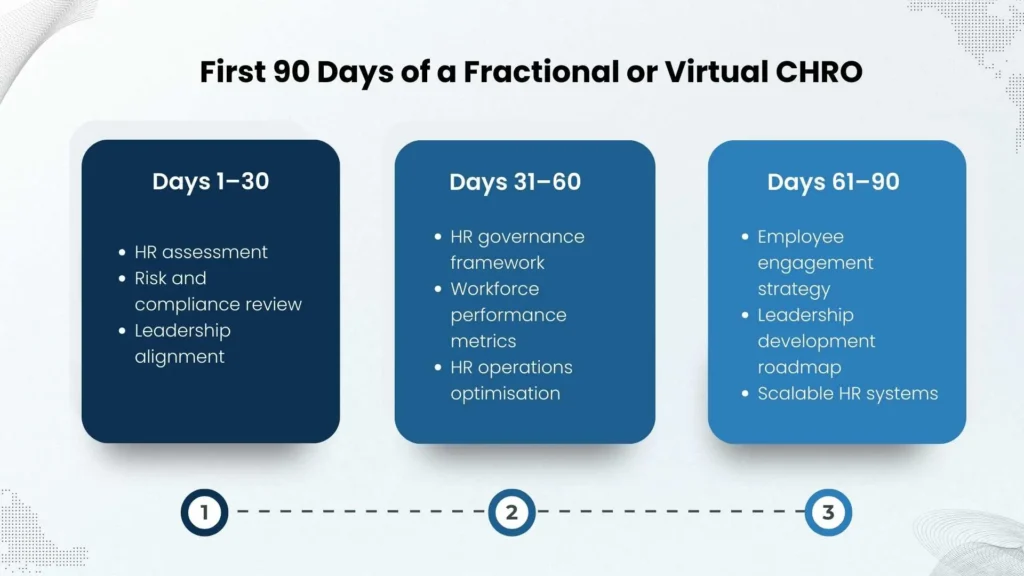
This includes:
- Designing workforce strategies aligned with business goals
- Building leadership capability through structured leadership development strategy
- Creating systems to improve workforce performance
- Linking people metrics to business outcomes
By stepping back from daily execution, on-demand CHROs provide clarity, structure, and long-term direction.
HR Compliance Leadership in a High-Risk Environment
One area where organizations struggle most is hr compliance leadership. Employment laws, statutory obligations, and governance requirements continue to grow more complex, especially across multiple locations.
On-demand CHROs play a critical role in:
- Establishing a robust hr governance framework
- Ensuring regulatory alignment across policies and practices
- Proactively managing hr risk before issues escalate
- Supporting audits, investigations, and compliance reviews
This strategic oversight reduces exposure while strengthening internal accountability.
Managing Distributed and Remote Workforces
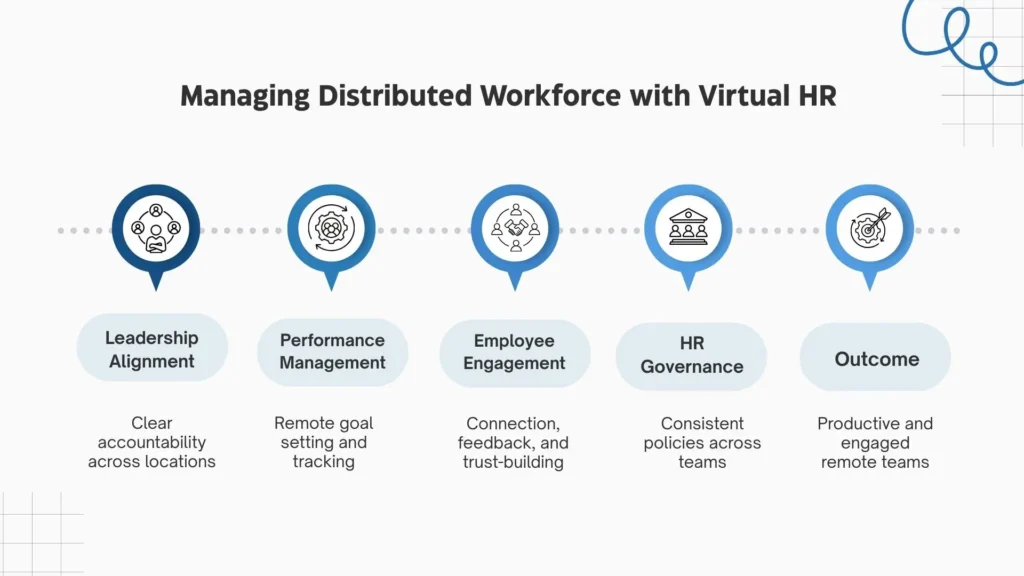
Effectively The rise of remote and hybrid work has created new challenges in consistency, culture, and performance. Many organizations struggle with managing distributed workforce structures while maintaining engagement and productivity.
CHRO services on demand bring structured approaches to:
- Remote performance management frameworks
- Communication and feedback systems
- Engagement models tailored to virtual teams
- Leadership capability for remote people management
By applying Virtual HR solutions, organizations can create scalable systems that support both flexibility and control.
Driving Employee Engagement Through Strategic Design
While many companies talk about engagement, few approach it strategically. On-demand CHROs focus on building engagement into systems rather than relying on ad-hoc initiatives. This includes:
- Designing role clarity and career pathways
- Aligning rewards and recognition with performance
- Strengthening leadership behaviors that influence engagement
- Using data to measure and improve employee engagement
Sustainable engagement is not driven by perks, it is driven by trust, structure, and leadership consistency.
HR Digital Transformation as a Leadership Priority
Technology alone does not transform HR leadership. HR digital transformation requires strategic direction to ensure tools actually solve business problems.
Fractional and virtual CHROs guide organizations through:
- HR tech selection aligned with business maturity
- Process automation across HR operations
- Workforce analytics for decision-making
- Integration of systems across payroll, performance, and learning
This ensures technology investments deliver measurable value rather than adding complexity.
Measuring Workforce Performance and Leadership Impact
One topic often missed in CHRO discussions is measurement. On-demand HR leaders focus heavily on linking people initiatives to outcomes.
This includes:
- Defining KPIs tied to workforce performance
- Tracking leadership effectiveness
- Measuring attrition, productivity, and engagement trends
- Creating dashboards that inform executive decisions
Measurement brings credibility to HR leadership and strengthens its role in business planning.
Succession Planning for Sustainable Growth
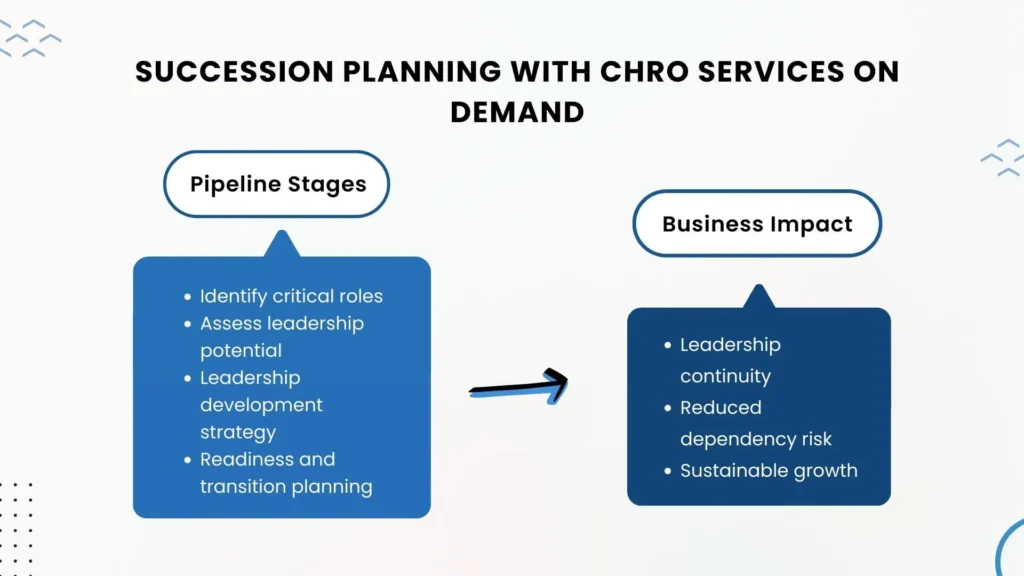
Many organizations delay succession planning until leadership gaps become urgent. On-demand CHROs approach succession as a continuous process rather than a one-time exercise.
This involves:
- Identifying critical roles and future capability needs
- Developing internal leadership pipelines
- Creating readiness frameworks and development plans
- Reducing dependency on external hiring for key positions
Succession planning ensures continuity while supporting long-term organizational stability.
How on Demand Support Business Transitions
CHRO services on demand are particularly valuable during periods of transition. These include rapid scaling, restructuring, leadership changes, or market expansion.
On-demand HR leaders provide stability by:
- Designing change management frameworks
- Aligning workforce strategy with new business direction
- Supporting leaders through transformation phases
- Maintaining compliance and engagement during uncertainty
Their external perspective combined with internal accountability makes them uniquely effective during change.
Virtual HR Leadership Without Losing Strategic Control
A common concern around Virtual HR models is loss of control or alignment. In practice, on-demand CHROs operate with clear governance, defined outcomes, and strong executive collaboration.
Through structured engagement models, Virtual HR solutions deliver:
- Regular leadership cadence and reporting
- Transparent accountability for outcomes
- Integration with internal teams
- Strategic visibility without physical presence
This allows organizations to benefit from expertise without geographic constraints.
The Future of HR Leadership Is Flexible and Outcome-Driven
The rise of CHRO services on demand reflects a broader shift in how leadership itself is evolving. Organizations no longer require static roles; they require adaptable expertise that evolves with business needs.
By combining strategic depth, operational understanding, and flexible engagement, Fractional CHRO and outsourced CHRO models are redefining how HR leadership is accessed and delivered.
As workforce complexity increases and business cycles shorten, on-demand HR leadership is becoming a strategic advantage not just an alternative model.
FAQ’s
Startups, SMEs, and growing companies that need strategic HR leadership but cannot justify a full-time role often benefit most from Virtual HR or outsourced CHRO services.
A Fractional CHRO operates as part of the leadership team and is accountable for outcomes, while HR consultants typically offer advice or projects without ongoing executive responsibility.
They help organizations manage compliance leadership, workforce performance, leadership development, employee engagement, and HR digital transformation while reducing cost and risk.
Yes. On-demand CHROs design frameworks for managing distributed workforce structures, including performance management, engagement, and leadership alignment for remote teams.
They establish a strong HR governance framework, ensure regulatory alignment, and proactively manage HR risk through audits, policies, and leadership oversight.
Yes. Companies pay only for the level of leadership they need, making fractional or virtual CHRO models more cost-efficient than full-time executive hires.