Finding the right talent is increasingly complex. With changing candidate expectations, evolving job markets, and the need to fill roles quickly, businesses are relying on hiring agencies for support.
What many companies don’t realize is that a good agency doesn’t just send over a stack of resumes. They manage the entire talent acquisition lifecycle, from the moment a job opening is identified to the day a new employee walks through the door (or logs in remotely). This complete, structured approach is what makes recruitment agencies so valuable in today’s competitive hiring environment.
This guide explains how the process works and highlights key insights often overlooked in similar discussions.
What Is End-to-End Recruitment?
End-to-end recruitment, or full cycle recruiting, involves managing every stage of the hiring process through a single provider. Instead of handling job boards, background checks, interviews, and HR paperwork separately, one agency coordinates all aspects efficiently.
The full recruitment process typically spans six core stages:
- Workforce planning and job requisition — defining what the business actually needs
- Candidate sourcing — finding the right people across multiple channels
- Screening and assessment — filtering for genuine fit, not just qualifications on paper
- Interview coordination — managing logistics and keeping candidates engaged
- Offer management and negotiation — getting to a signed contract efficiently.
- Onboarding support — ensuring the new hire lands well and stays
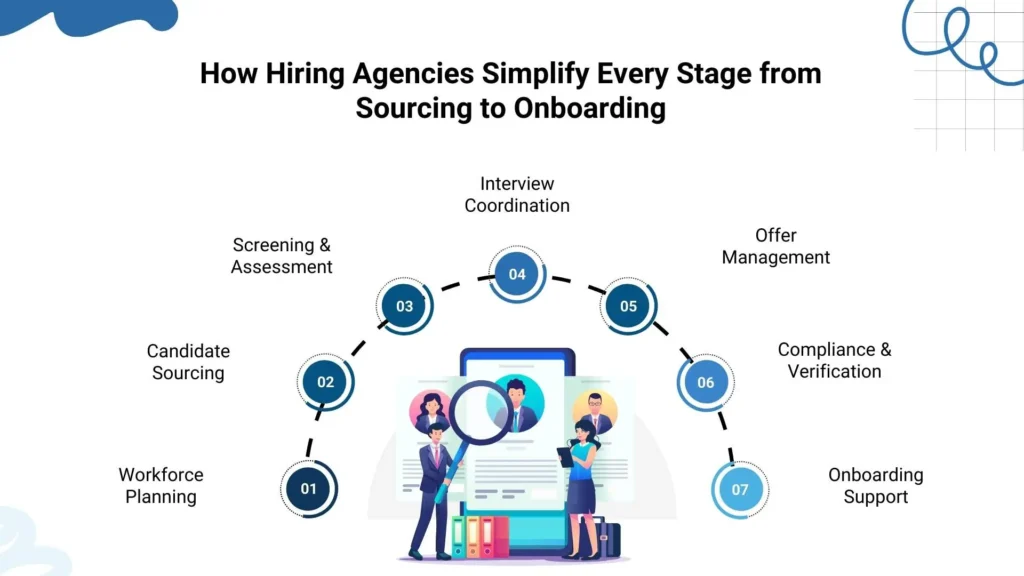
When done well, each stage moves smoothly into the next, saving companies time, money, and frustration. The real strength of this model is not just efficiency but also consistency. Every candidate follows the same thorough process, and every hiring decision is based on the same quality information.
It Starts Before the Job Is Even Posted
Before reaching out to any candidates, good staffing services start with a strategic conversation. What does the business need? Is this a long-term hire or a contract role? Does the job require specific technical skills or a more general background?
This discovery phase is where agencies add value that many companies overlook. Skilled recruiters help define the role clearly, question unclear or unrealistic job descriptions, and match hiring expectations to the current market. For example, if a company wants a senior data engineer with five years of experience for a mid-level salary, a good agency will point out the mismatch early, not after months of searching. Getting the job details right from the start is what sets great agencies apart.
Sourcing That Goes Far Deeper Than a Job Board
Posting on LinkedIn or Indeed is the bare minimum. Hiring agencies invest in multi-channel sourcing strategies that most internal HR teams simply don’t have the bandwidth or tools to replicate. This includes tapping into passive candidate networks, professionals who aren’t actively job-hunting but are open to the right opportunity. It also means leveraging applicant tracking systems to access pre-screened talent pools built over years of prior placements.
Tech recruitment agencies often have strong connections in specialized communities such as developer forums, GitHub, technical meetups, and niche job boards. This gives them access to candidates that general searches rarely find. For companies hiring in fields like software engineering, data science, or cybersecurity, this depth can mean filling a role in weeks instead of months.
Screening: Where the Real Time-Saving Happens
A typical corporate job posting gets over 250 applications. Reviewing them all is a full-time job, and most internal teams don’t have the capacity to do it well.
Recruitment agencies apply structured screening frameworks to filter candidates based on multiple dimensions of fit. Beyond just reading resumes, agencies typically conduct:
- Initial screening interviews to assess communication, motivation, and basic role alignment
- Skills-based assessments tailored to the specific technical or functional requirements of the role
- Compensation alignment checks to ensure expectations match the budget before anyone’s time is wasted
- Cultural fit evaluation based on a deep understanding of the client’s working environment and team dynamics
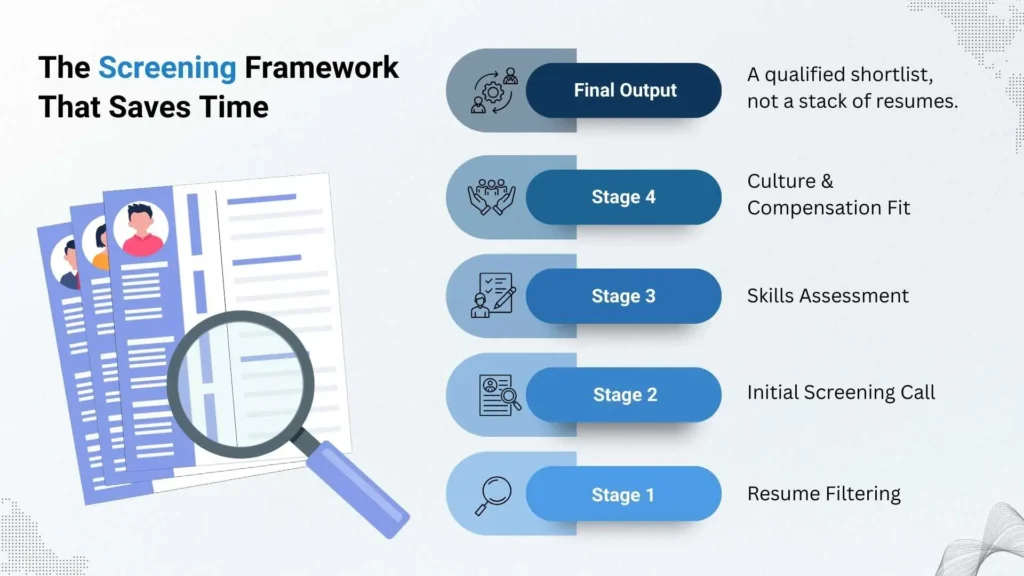
This process leads to a shortlist of truly qualified candidates instead of a stack of applications. Structured screening cuts down time-to-hire and saves hiring managers from wasting hours on unproductive interviews.
Managing the Interview Process and Protecting Candidate Experience
One part of agency work that’s often overlooked is managing hiring logistics. Coordinating interview schedules between candidates, hiring managers, and other stakeholders takes a lot of time. If it’s not done well, companies risk losing top talent.
Candidates today expect communication to be fast, clear, and respectful of their time. Hiring agencies act as the central point of contact throughout the process, keeping candidates informed, answering questions, and ensuring no one is left waiting in silence for weeks. This directly addresses one of the biggest problems in modern recruitment: candidate ghosting. When candidates disengage mid-process, it’s almost always because communication broke down somewhere. Agencies prevent this by maintaining consistent touchpoints and treating candidates as valued people, not just applicants in a pipeline.
The Compliance Layer Nobody Talks About
This is a topic that few people discuss, yet it’s one of the most important things good staffing services handle.
Hiring comes with significant legal and compliance obligations that businesses often underestimate until something goes wrong. These include:
- Right-to-work verification and employment eligibility checks
- GDPR and data privacy compliance throughout the candidate journey
- Background and reference checks handled correctly and consistently.
- Worker classification ensuring contractors and permanent staff are structured correctly to avoid costly misclassification risk
- Industry-specific licensing and certification verification for regulated sectors like healthcare, finance, or engineering
Whether a company is hiring locally or across borders, agencies know the compliance requirements and have systems in place to meet them, without burdening the client’s internal team. For businesses that regularly hire contractors or temporary staff, getting this wrong is expensive. Agencies make sure it’s handled right from day one.
Offer Management: More Than Just a Number
Extending an offer is not just about sending a salary figure over email. It requires understanding market compensation benchmarks, carefully managing candidate expectations, and navigating counteroffers, all while keeping the process moving quickly enough that your top choice doesn’t accept another role in the meantime.
Agencies bring salary benchmarking data, live market intelligence, and real negotiation experience to this stage. They act as a neutral intermediary between employer and candidate, which often makes difficult conversations significantly easier and increases the likelihood of accepted offers first time. This is particularly valuable for tech recruitment agencies, where compensation expectations are high, negotiation is standard, and the cost of losing a candidate at the offer stage after weeks of process is enormous.
What Happens After the Hire? The Post-Placement Gap
Here’s something the majority of content on this topic completely skips over: what a genuinely good hiring agency does after the candidate starts.
The best agencies stay involved after the offer letter is signed. They check in at 30, 60, and 90 days with both the new hire and the client to make sure the placement is working for everyone. Early turnover, when a new employee leaves in the first few months, is costly and disruptive. Proactive support after hiring lowers this risk and protects everyone’s investment. Many agencies also offer replacement guarantees for a set period, giving businesses extra peace of mind.
Why Startups and SMEs Benefit the Most
Large companies often have full talent acquisition teams with sourcers, coordinators, and HR partners. Startups and small businesses usually don’t have these resources. For them, handling the whole hiring process internally can feel overwhelming.
This is where recruitment agencies deliver their most outsized value. A growing business doesn’t need to build an internal recruiting infrastructure to hire like a large company. They can access the full capability of an experienced agency on a per-hire or ongoing basis from crafting job descriptions to managing compliance to closing offers. The result is a faster, more professional hiring process that would otherwise require a team of people to execute.
Building a Talent Pipeline, Not Just Filling Vacancies
The most forward-thinking staffing services go beyond reactive hiring altogether. They work with clients to build proactive talent pipelines, warm networks of pre-vetted candidates who can be engaged quickly when a new role opens.
This is especially helpful for fast-growing companies that hire often. Instead of starting from scratch each time, they have a shortlist of interested, pre-screened candidates ready to go. This approach cuts time-to-hire, lowers costs, and gives businesses a real edge in competitive talent markets where speed matters.
Understanding Which Agency Model Is Right for You
Not all hiring agencies work the same way, and picking the wrong model can waste time and money. Contingency agencies are paid only when they make a placement, which works well for standard roles that need to be filled quickly. Retained agencies get an upfront fee for exclusive searches, making them better for senior, specialized, or confidential hires where thoroughness is key. RPO providers become part of your business and handle all recruitment on an ongoing basis, which is best for companies with high-volume or constant hiring needs.
Understanding which model fits your current situation is itself part of what a good agency will help you figure out before any search begins.
Let Transparian Handle All of This for You
Everything in this guide, from workforce planning and deep candidate sourcing to compliance, offer negotiation, and post-hire check-ins, is what Transparian provides for businesses every day. If you want to simplify your recruitment process and hire with confidence, Transparian is ready to help.
FAQ’s
End-to-end recruitment, also known as full-cycle hiring, is when a recruitment agency manages the entire hiring process from workforce planning and sourcing to interviews, offer negotiation, and onboarding support.
Hiring agencies use multi-channel sourcing strategies including talent databases, passive candidate networks, referrals, niche platforms, and professional communities. This allows them to access qualified candidates who may not be actively applying on job boards.
Yes. Agencies conduct resume screening, initial interviews, skill assessments, background checks, and shortlisting before presenting candidates to the employer, saving significant time for internal teams.
Agencies act as a central communication point, provide interview updates, manage scheduling efficiently, and maintain consistent engagement, reducing candidate drop-offs and improving employer branding.
Absolutely. Startups and SMEs benefit greatly because agencies provide full recruitment expertise without requiring an in-house talent acquisition team, making hiring faster and more structured.
Yes. Many agencies manage right-to-work checks, employment eligibility verification, background screening, data privacy compliance, and proper worker classification to reduce legal risk for employers.