
Employee well-being is no longer just a perk; it’s a critical driver of retention, productivity, and compliance. In India, providing the right mix of employee benefits both statutory and voluntary along with ensuring proper tax deductions and filings, is not just about keeping employees happy but also about meeting strict legal obligations. With frequent changes in tax rules, labor laws, and payroll requirements, businesses, especially global startups often struggle to stay compliant. This is where Employer of Record (EOR) services become a game-changer.
In this blog, we’ll cover what employee benefits in India typically include, the latest updates on payroll and employee taxation, and how an EOR company helps businesses streamline compliance while focusing on growth.
Understanding Employee Benefits in India
Employee benefits in India fall broadly into three categories: statutory, voluntary, and perks. Employers must comply with the statutory ones, while voluntary benefits and perks often serve as differentiators in attracting and retaining talent.
1. Statutory Employee Benefits
Statutory benefits are mandated by Indian labor laws and monitored by various state and central agencies. These include:
- Provident Fund (PF): Employers must contribute 12% of an employee’s basic salary to the Employees’ Provident Fund.
- Employees’ State Insurance (ESIC): Mandatory for organizations with 10+ employees earning up to ₹21,000/month. Employers contribute 3.25% of wages.
- Gratuity: Payable after 5 years of continuous service, equivalent to 15 days’ wages for each completed year.
- Maternity Benefit: 26 weeks of paid leave under the Maternity Benefit Act.
- Leave Policies: Minimum paid leave varies by state laws, typically around 12–15 per year.
- Professional Tax: Levied by state governments, typically ₹200 per month in some states.
2. Voluntary Benefits
Companies often go beyond statutory requirements to offer:
- Medical/Health Insurance (family floater, dental, mental health add-ons).
- Group Life Insurance for financial security.
- Stock Options (ESOPs) to attract and retain top talent.
- Retirement Benefits like superannuation funds.
3. Perks and Modern Additions
Post-2024, many companies are adopting flexible benefits packages, allowing employees to customize perks. Popular perks include:
- Work-from-home allowances.
- Meal cards and wellness programs.
- Learning & development budgets.
- Flexible leave options for caregiving or study breaks.
Employee Taxation in India: FY 2025–26 Updates
The Indian tax system for salaried employees continues to evolve. Employers must stay updated to avoid penalties and compliance risks.
New Income Tax Slabs for FY 2025–26
| Income Slab | Tax Rate (New Regime) | Tax Rate (Old Regime) |
| Up to ₹4,00,000 | NIL | NIL |
| ₹4,00,001 – ₹8,00,000 | 5% | 5% (from ₹2.5L) |
| ₹8,00,001 – ₹12,00,000 | 10% | 20% (from ₹5L) |
| ₹12,00,001 – ₹16,00,000 | 15% | 30% (from ₹10L) |
| ₹16,00,001 – ₹20,00,000 | 20% | 30% |
| ₹20,00,001 – ₹24,00,000 | 25% | 30% |
| Above ₹24,00,000 | 30% | 30% |
Employer Obligations
- TDS (Tax Deducted at Source): Must deduct tax as per prevailing slabs and remit monthly.
- PF and ESIC Compliance: Timely and accurate deposits mandated; defaults attract penalties.
- Professional Tax: Collected by states, deducted from salary, varies by location.
- Gratuity and Leave Encashment: Amounts beyond prescribed limits are taxable.
- ITR Filing: Income exceeding ₹4 lakhs must be declared; employers must facilitate Form 16 issuance.
3. Latest Notifications & Changes (2025–26)
- Increased Standard Deduction: Raised to ₹75,000 in the new regime.
- Digital Compliance: EPFO and ESIC portals fully integrated with the Ministry of Labour compliance system for real-time checks.
- State-Level Variations: Karnataka and Maharashtra revised Professional Tax slabs in April 2025.
- Remote Employee Taxation India: The CBDT issued clarifications that employees working remotely from states different from their employer’s registered office must comply with that state’s PT rules.
Industry Insights: Emerging Trends
The compliance landscape is shifting, and employers need to adapt quickly.

- Flexible Benefits Planning Post-2024: Surveys show that 63% of employees prefer customizable benefits packages over standardized ones (Mercer India, 2024).
- Remote Work Taxation Challenges: Employees working from different states face varying professional tax and state labor law requirements.
- Cross-Border Compliance: Startups hiring globally now demand alignment of benefits across geographies, from stock options to health plans.
Challenges for Employers and the Role of EOR Services
Managing payroll, benefits and compliance across Indian states, especially with remote teams or cross‑border hiring, presents significant risks.
Common Pain Points
- Varying state laws for professional tax, leave, and labor compliance.
- Administration of statutory deposits (PF, ESI, gratuity) across multiple accounts and deadlines.
- Misclassification of employee benefits leading to tax or regulatory penalties.
- Complexities in remote employee taxation, especially for distributed teams.
- Lack of specialist knowledge regarding voluntary and global benefits packages.
How Employer of Record Services Help
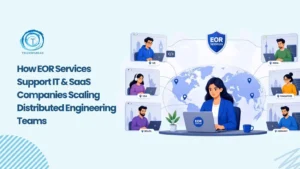
For businesses scaling into India, handling these complexities without a legal entity is daunting. An EOR company provides end-to-end employer of record solutions that cover benefits, taxation, and compliance seamlessly.

1. Benefits Administration
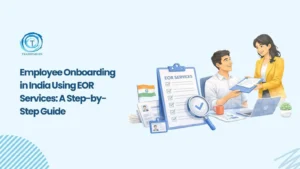
Employer of record services ensure accurate enrollment of employees into PF, ESIC, and insurance schemes while also managing voluntary and flexible benefits.
2. Payroll & Employee Taxation
An EOR services in India handles:
- Salary structuring compliant with tax rules.
- Monthly TDS deductions and filings.
- PF and ESIC contributions and challan generation.
- Professional tax deductions across states.
3. Statutory Registration & Compliance
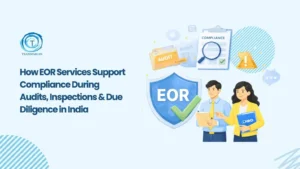
From Shops & Establishments registration to state-wise labor law compliance, an EOR company acts as the official employer, shielding foreign entities from risk.
4. Risk Mitigation & Cost Efficiency
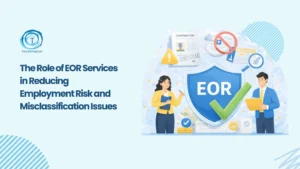
By ensuring PF and ESIC compliance and avoiding penalties for delayed filings, EORs minimize legal and financial risks. Companies save significantly by avoiding the overhead of setting up an entity in India.
Case Example:
A SaaS startup trying to onboard developers pan-India used an EOR company to ensure compliance with local labor codes, payroll deductions, and remote work taxation. Without EOR, they risked PF deposit delays and tax mismatches, resulting in penalty notices. The EOR’s automation helped them keep payroll accurate and compliant, while offering hybrid work perks.
Conclusion
For HR leaders, founders, and compliance officers, balancing statutory benefits, voluntary perks, and ever‑changing tax regulations is critical for sustainable success in India. Employers of record services cut through the complexity, accelerate hiring, and protect companies from compliance pitfalls enabling scale without a legal entity.
Whether a startup, global enterprise, or remote‑first team, now is the time to explore EOR services for hassle‑free, compliant growth in India.
FAQ’s
EPF, ESIC, gratuity, paid leave, and maternity benefits are compulsory for qualifying establishments. Compliance is monitored by government authorities.
They implement state‑wise tax deduction and benefits mandatory for remote staff, using AI‑enabled platforms for compliance accuracy.
Non-compliance with PF, ESIC, or TDS rules can result in heavy penalties. Employer of record services eliminate this risk.
Deduct TDS as per slab, deposit PF and ESIC, compute professional tax, and issue Form 16 annually.
Yes, EOR services in India manage state-specific PT and labor law compliance for remote employees, ensuring payroll accuracy.