
In 2025, India continues to be a magnet for global talent acquisition ranking among the top markets worldwide for skilled professionals in IT, engineering, design, and back-office operations. The ManpowerGroup Employment Outlook Survey has identified India as having one of the largest net employment outlooks in the world in Q4 2025, as the digital economy and global remote hiring trends drive jobs in that country.
To the global talent teams and the HR leaders, India is an opportunity but a complex scenario. The establishment of a local legal entity requires numerous registrations, filing of compliance, and several months of administrative handling. This is the reason why the services of Employer of Record (EOR) are becoming very popular with global companies who are now looking to hire employees in India and manage them without necessarily setting up a real business establishment.
An EOR acts as the legal employer on behalf of a foreign company, handling payroll, taxes, statutory benefits, and compliance outsourcing under Indian employment laws. The model provides the international employers with the liberty to create and operate teams swiftly, cheaply, and within compliance.
Market Insight: Rising Shift to EOR in 2025
India’s hiring landscape has seen a structural shift toward flexible global hiring solutions. It has been reported that there is a high increase in international recruitment using the EOR services in India where companies are wanting to tap into the extensive pool of deep tech and services talent without necessarily incorporating the country.
According to the survey conducted by ManpowerGroup, the employers in India expect better hiring intentions than those of most markets globally. At the same time, digital transformation, the gig economy, and remote workforce management have made cross-border collaboration the new normal.
The 2025 industry studies by Deloitte and Gartner note that international organizations are focusing on agility and compliance in workforce planning. EOR alliances have now become an important strategic facilitator such that companies can employ legally and efficiently in multiple jurisdictions at a minimum administrative cost.
As India is set to supply nearly a quarter of the total worldwide tech talent by 2025, global employers are considering EOR services as the quickest way to get access to talented professionals in the tech industry such as software engineers, data scientists, finance, and design professionals with no timelines to set up.
Key Drivers Behind EOR Popularity in India

1. Complexity of Entity Setup
To open a local subsidiary in India, it is necessary to obtain registrations with various institutions, such as the Ministry of Corporate Affairs, Goods and Services Tax (GST) office, Provident Fund Organization, and labour offices at the state level. The procedure may last months and may include continuous filings and audits.
An EOR bypasses this entirely. Companies can legally hire in India without entity within weeks, as the EOR already holds the necessary registrations and operates as the employer of record.
2. Speed and Cost Efficiency
Establishing an organization is time-consuming as well as costly. Early costs can be quite high due to office leases, director appointments and legal retainers and the administrative overheads. India is a country where EOR services can be hired quickly with stable monthly charges and no capital outlay.
In the case of startups or international companies trying the Indian market, such flexibility provides an effective method to check the viability of business risk before investing in the fixed infrastructure.
3. Local Compliance Expertise
There are various employment laws in India with local interpretations, such as the employment security (EPF, ESIC) and other benefits like gratuity, maternity and professional tax.
EOR providers introduce a local knowledge base, which ensures accuracy in payrolls, statutory returns, and prompt contributions in addition to adjusting to changing labour codes. This enables multinational corporations to concentrate on output and development instead of regulatory compliance.
4. Reduced Risk and Legal Protection
When hiring directly without a registered entity, companies face risks related to worker misclassification, tax non-compliance, and employee disputes. EOR services enable the legal employer to take up this role, with the minimal risk of exposure to reputational or financial harm.
This model will guarantee complete observation of the Indian labour laws with protection of the interests of both the employer and the employees.
How EOR Solves Global Expansion Challenges
Simplified Hiring Without Incorporation

Here’s how EOR services in India work:
- You identify and select candidates.
- The EOR signs local employment contracts compliant with Indian law.
- Payroll, tax deductions, and statutory filings are managed by the EOR.
- You manage the employee’s deliverables, projects, and performance directly.
- The EOR ensures legal and tax compliance throughout the employment cycle.
This enables global companies to hire in India without entity while maintaining full operational control over their workforce.
Flexible Employment Models
EORs support both permanent and contractual roles, giving organizations the flexibility to scale up or down as required. This flexibility is particularly valuable for industries like IT, SaaS, and engineering where project-based or hybrid hiring is common.
Industry Use Cases
- Technology and SaaS: Build a software development team in Bengaluru or Hyderabad through an EOR and start operations within weeks.
- Engineering and Design: Hire engineers or R&D professionals for global projects without setting up a physical branch.
- Professional Services: Onboard consultants, finance specialists, or marketing professionals in India under compliant employment contracts managed by the EOR.
In each case, the EOR provides a fully compliant framework for remote workforce management while the company focuses on its core business outcomes.
Regulatory and Compliance Edge (2025 Updates)
The labour environment in India is changing at a high rate in an effort to enhance efficiency in the business operations and safeguard the rights of the workers. Key updates relevant to global compliance hiring include:
- Implementation progress on the new Labour Codes the Code on Wages, the Code on Social Security, the Industrial Relations Code, and the Occupational Safety, Health and Working Conditions Code.
- Continued digitization of payroll and labour compliance systems by state governments, simplifying multi-state employment tracking.
- New data protection requirements under the Digital Personal Data Protection Act, 2023, which mandate secure handling of employee information by employers and service providers.
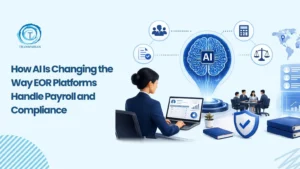
The latest EOR platforms include automated compliance dashboards and AI-based alerts that monitor the local regulatory reforms. This automation will greatly decrease compliance risk and administration overheads to international companies that operate distributed teams.
Future Outlook & Strategic Takeaways
1. Technology-Led EOR Innovations
The models of EOR are increasingly being technologically oriented. Such AI-based compliance tracking, the convergence of global payroll, and management dashboards in many countries are nowadays a norm. The tools are revolutionizing business approaches to the management of remote workforce and global hiring solutions.
2. Growth Outlook for 2026 and Beyond
Analysts in the industry forecast the adoption of EOR in India to expand by two digits on an annual basis until 2026. As India supplies an increasing percentage of the worldwide technological labor force, Indian EOR will be the optimal model of agile, compliant, and scalable global staffing.
3. Strategic Lessons for Global Employers
- Use EOR services as a bridge to test new markets.
- Choose partners with proven local expertise and multi-state coverage.
- Ensure transparency in payroll, tax, and benefits handling.
- Leverage compliance outsourcing to stay ahead of regulatory change.
Conclusion
As 2025 unfolds, India’s skilled workforce and evolving regulatory landscape make it one of the world’s most attractive markets for global expansion. Yet, setting up an entity remains a slow, costly, and compliance-heavy process.
EOR services in India offer a faster, compliant, and cost-efficient path empowering companies to hire in India without entity, manage operations remotely, and maintain full compliance across payroll, taxation, and labour laws.
For global businesses seeking agility, compliance, and scalability, partnering with an EOR company is not just an operational choice, it’s a strategic advantage in today’s borderless hiring world.
FAQ’s
An EOR company manages all legal and HR responsibilities for your Indian hires. It enables you to onboard employees quickly, run payroll in compliance with Indian labor laws, and avoid the lengthy process of creating a local subsidiary.
Global companies choose EOR services in India because they offer faster market entry, reduced setup costs, and full legal compliance. The model also minimizes regulatory risks while helping companies access India’s vast tech and professional talent pool.
With employer of record services, companies can hire in India within 2–3 weeks, a process that typically takes months with a traditional entity setup.
A trusted EOR service provider manages end-to-end statutory compliance, including EPF, ESIC, TDS, professional tax, gratuity, and labour welfare laws.
Industries such as technology, SaaS, consulting, manufacturing, and digital marketing use EOR services to scale their workforce efficiently.
By acting as the legal employer, the EOR company assumes responsibility for employment contracts, terminations, and compliance liabilities.