

In today’s fast-changing talent landscape, the way an organization hires is no longer just an HR function, it is a direct reflection of its values, integrity, and long-term vision. Companies across industries are increasingly realizing that ethical recruitment practices and strong recruitment compliance are essential for protecting brand reputation, ensuring legal safety, and building a workforce founded on fairness and trust. With the rise of AI-enabled tools, evolving labour laws, cross-border hiring, and remote work trends, organizations must rethink how they source, assess, and onboard talent so every step consistently aligns with ethics and compliance.
Beyond simple hiring transactions, ethical and compliant recruitment has become a strategic business priority that influences productivity, culture, and even investor confidence.
Why Ethical Recruitment Matters in Modern Workplaces
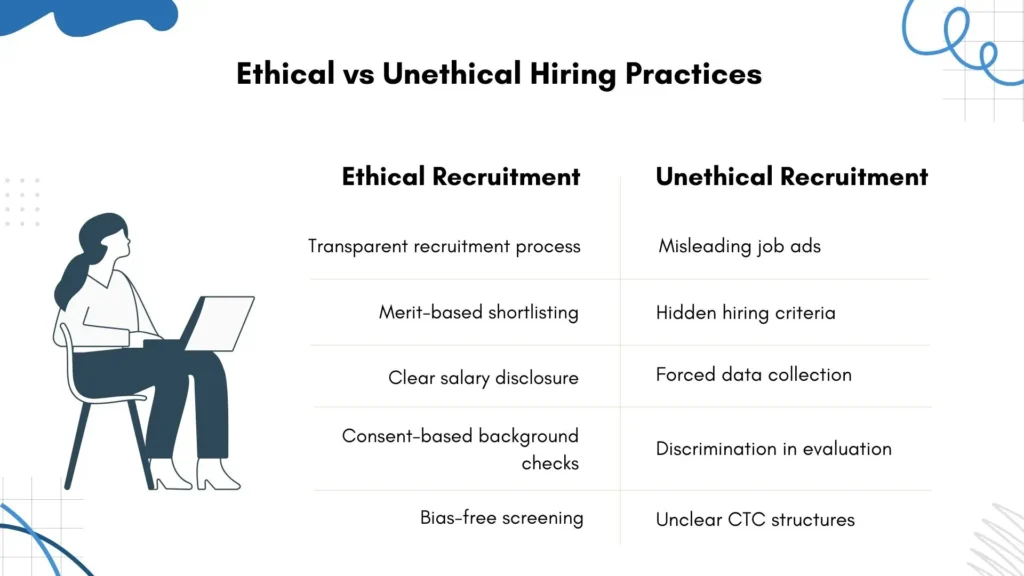
The initial step in ethical recruitment is fairness, transparency, and integrity in the whole recruitment process. Candidates need to feel respected, communicate freely and be assessed without personal motives and prejudice. Here, we need to have a clear definition of timelines and results, organized interviews, clear job definition, impartial screening, and transparent recruitment process.

Modern jobseekers prioritize companies that practice fair candidate evaluation and equal opportunity hiring. Ethical processes do not only enhance the candidate experience, but also the employer branding, long-term retention, and decreases the disputes in hiring. In today’s competitive market, where top talent can choose their employers, organizations that consistently act fairly naturally stand out.
Growing Legal Pressures and the Rising Need for Compliance
The hiring landscape is becoming increasingly regulated. Organizations are expected to follow regional, national, and global labour standards to avoid legal, financial, and reputational consequences. For businesses hiring in India, Indian labour law recruitment requirements demand strict attention from anti-discrimination guidelines to background verification norms, data privacy rules, and state-specific employment regulations.
Hiring compliance will mean that every candidate will be given a fair hearing, the data will be kept safely and the hiring decisions can be defended under legal scrutiny. That’s why more companies are now adopting structured recruitment models, uniform documentation, interview audits, and legally harmonised hiring processes.
Compliance is not optional, it is a safeguard against legal penalties, candidate complaints, and reputational harm. The growing inquisitiveness of regulatory authorities, employment platforms, and employee communities is putting a strong governance of recruitment in the limelight as never before.
The Role of Recruitment Agencies and Staffing Partners in Ethical Hiring
Most organizations are currently using the services of recruitment agencies and staffing services to tap into bespoke talent pools, decrease time-to-hire and facilitate large-scale hiring efforts. Nonetheless, engaging in outsourcing with regard to hiring does not make organizations less responsible about the fact that their recruitment partners adhere to ethical recruitment practices and concrete compliance guidelines.
Staffing companies can be ethical and uphold transparent sourcing practices, do not have deceptive job ads, safeguard applicant confidentiality, and follow labour legislation. They prioritize non-discriminatory hiring, maintain documentation trails, and ensure that all job offers, assessments, and onboarding steps are legally aligned. Companies collaborating with agency compliance minimize risks, improve the efficiency of hiring, and preserve brand reputation.
Bias-Free Hiring and Ethical Use of Technology
With the changing hiring technologies, companies are increasingly turning to AI-based applications to filter applications, score candidates, and predict job fit. Although these tools are fast and efficient, they also bring certain threats of algorithmic bias, lack of transparency in decision-making, and possible discrimination. Ethical recruiting should have technology aid human beings and not judgment. Responsibilities of algorithms, fairness of AI, transparent scoring and human participation in each critical phase fall under the ethical considerations.
The organizations should make sure that the automated systems do not discriminate against candidates on the basis of gender, age, disability, or background. They should also keep things explainable. The candidates should be able to explain how the decisions that involve them were made. The responsible use of technology during the recruitment process is a best practice but it is rapidly turning into a compliance requirement.
Fair, Structured, and Standardized Evaluation Practices
To achieve unbiased hiring, evaluation methods must be structured, consistent, and transparent. This includes:
- Standardized interview questions for all candidates
- Clear scoring rubrics
- Job-related assessments
- Avoiding personal or sensitive information during interviews
- Documenting each decision
Structured evaluation supports fair candidate evaluation, reduces discrimination risks, and creates a defensible hiring process. When interviewers follow consistent guidelines, decisions become more objective, predictable, and compliant with legal standards.
Ethical Data Handling and Candidate Privacy
One of the most sensitive elements of recruitment is candidate data. The recruitment process of the ethical recruitment involves safe manipulation of resumes, identification documents, tests, and background checks. Companies must comply with data protection regulations, obtain candidate consent for data usage, minimize data retention, and maintain strict confidentiality.
Ethical data practices not only prevent breaches but also build trust with candidates, who often share personal and professional information during hiring. Companies that practice data transparency and privacy protection differentiate themselves as responsible and trustworthy employers.
Recruitment Risk Management: Preventing Legal and Operational Pitfalls
Businesses face significant risks when hiring from misclassification of workers, discriminatory practices, and non-compliant documentation to privacy breaches, fraudulent candidates, and inaccurate background verification. This is why recruitment risk management is now a crucial HR capability.
Risk management in recruitment includes:
- Compliance audits
- Documentation checks
- Standardized interview reports
- Verification protocols
- Vendor audits for staffing partners
- Cybersecurity standards for candidate data
- Legal reviews of job postings and offer letters
Proactive risk management prevents costly disputes, ensures ethical decision-making, and protects organizations from compliance failures.
Onboarding Compliance: Extending Ethics Beyond Hiring
Ethics in recruiting does not end with the offer letter. Equal compliance and fairness in the post-selection processes should also be maintained. Onboarding Compliance involves proper issuance of the contracts, collection of the documents, statutory registrations, clear communication of policies, and orientation practices free of discrimination.
A structured ethically based process of onboarding is a good way to start on the right foot, minimize the anxiety generated by the employees and foster their trust. It assures all new recruits permanent, contractual, or remote people to have an equal and compliant induction into the organization.
Remote, Gig, and Cross-Border Hiring Ethics – A Growing Priority
As the phenomenon of remote work and gig models is growing, companies have to strike the balance between flexibility and compliance. Good Gig and contract worker recruitment entails proper contracts, clear payment conditions and compliance with international labour laws. Remote employment also requires transparency in work expectations, tax regulations, and geographical employment regulations.
As more organizations explore global talent pools, ethical and compliant hiring becomes even more essential to navigate complex labour landscapes.
Ethical Recruitment as a Foundation for Sustainable Growth
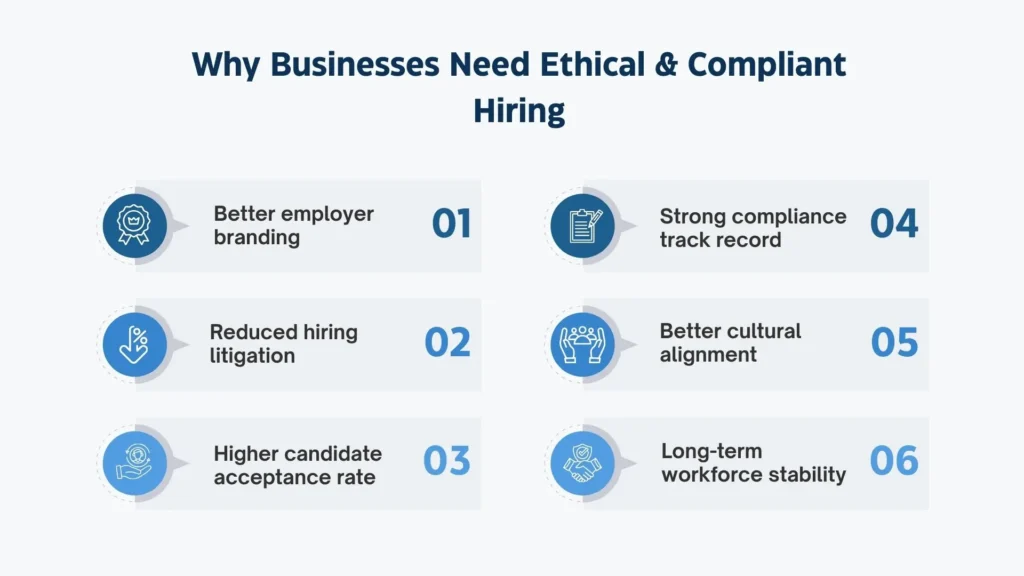
Ethical recruitment defines the culture, values and the long term orientation of a firm. Equity, integrity, respect, and adherence to laws make workplaces easy to work in as employees feel appreciated and safe. When ethics become a foundation of hiring choices, companies inherently tend to get better talent, lower turnover, and long-term loyalty of employees, partners, and the market.
FAQ’s
Ethical recruitment practices ensure fairness, transparency, equal opportunity, and respect for all candidates throughout the hiring process.
Recruitment compliance prevents legal risks, protects brand reputation, ensures non-discriminatory hiring, and aligns hiring practices with labour laws.
By using clear job descriptions, structured interviews, open communication, standard evaluation criteria, and documented hiring steps.
Non-compliance can lead to penalties, candidate disputes, data privacy violations, discrimination claims, and reputational damage.
It includes following India-specific rules such as anti-discrimination laws, verified documentation, fair hiring, PF/ESIC rules, and proper contract issuance.
Onboarding compliance ensures legal documentation, accurate contracts, statutory setup, and fair treatment after the offer is accepted.