As global hiring expands across borders, businesses face a complex mix of labour regulations, payroll rules, benefits administration, and worker classification challenges. These complexities grow even larger when companies scale into new markets without legal entities or with limited HR infrastructure. This is where EOR services leveraging the co-employment model have emerged as a trusted solution, helping organizations hire talent confidently while ensuring complete compliance and job security for employees.
While many know the surface-level definition of an Employer of Record, fewer understand how the co-employment structure works behind the scenes and why it has become essential for cross-border hiring compliance, risk mitigation, and long-term workforce stability. This blog explores the topics people frequently search for, as well as areas often missed in popular discussions such as country-specific risks, payroll governance, legal protections, and employee experience under EOR arrangements.
Understanding the Co-Employment Model in the Global Workforce Era
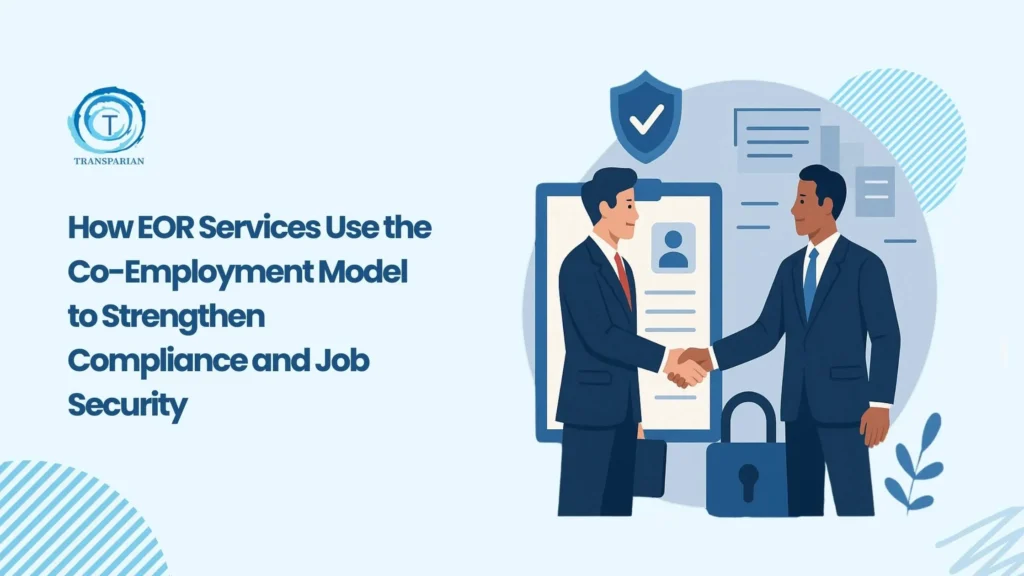
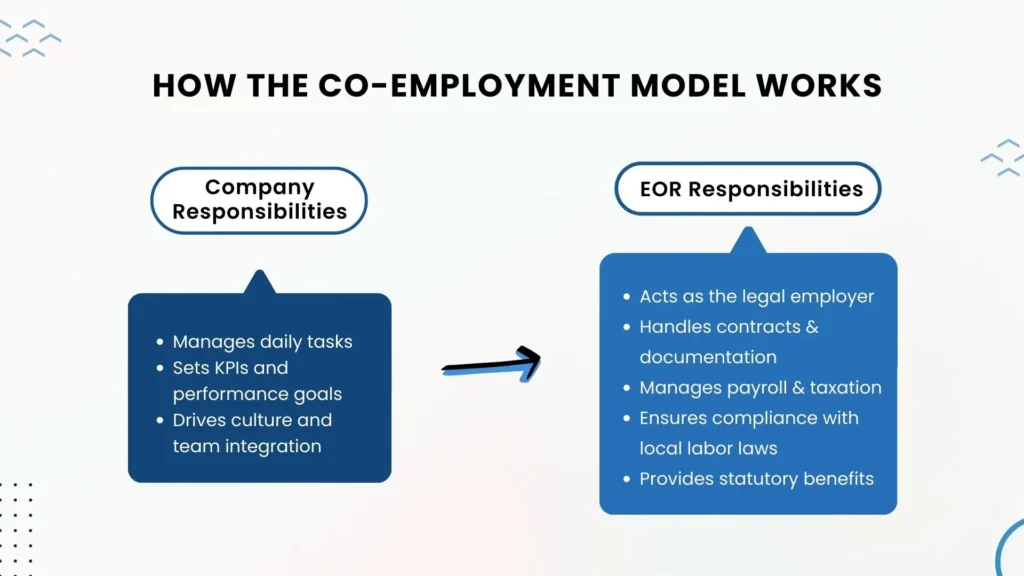
The co-employment arrangement simply means two parties share employment responsibilities:
- The client company (you) manages day-to-day work, performance, culture, and deliverables.
- The Employer of Record handles compliance, contracts, payroll, statutory obligations, and legal employment.
This structure ensures employees remain fully supported, while companies avoid complexities such as entity setup, labour-law violations, and administrative overhead.
A modern EOR works far beyond onboarding, it supports global employment compliance, ensures correct worker classification, manages benefits, and maintains employee protections across multiple jurisdictions. This protects organizations from misclassification penalties and protects employees from uncertain or unsafe employment arrangements.
Why EOR Services Are Essential for Ensuring Job Security
Employees recruited under an EOR are stable, since their employment conditions are associated with contractual employment that complies with legal regulations, rather than with informal employment and contractual compromises.EORs legally employ the talent, ensuring:
- timely salary payments
- statutory benefits according to local laws
- proper documentation and tax withholding
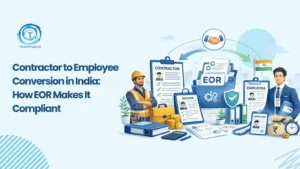
- protection against misclassification
- adherence to labour rights, safety standards, and termination rules
This will provide a working environment where the employees will feel safe, valued, and protected- irrespective of the country working in.
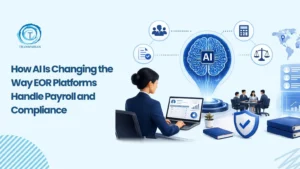
Also, through offering both organized global payroll outsourcing, the EORs are able to keep accurate records, avoid delays when it comes to paying salaries, and meet tax requirements, which is also a benefit to job security and employee confidence.
Preventing Misclassification – A Major Compliance Risk in Cross-Border Hiring
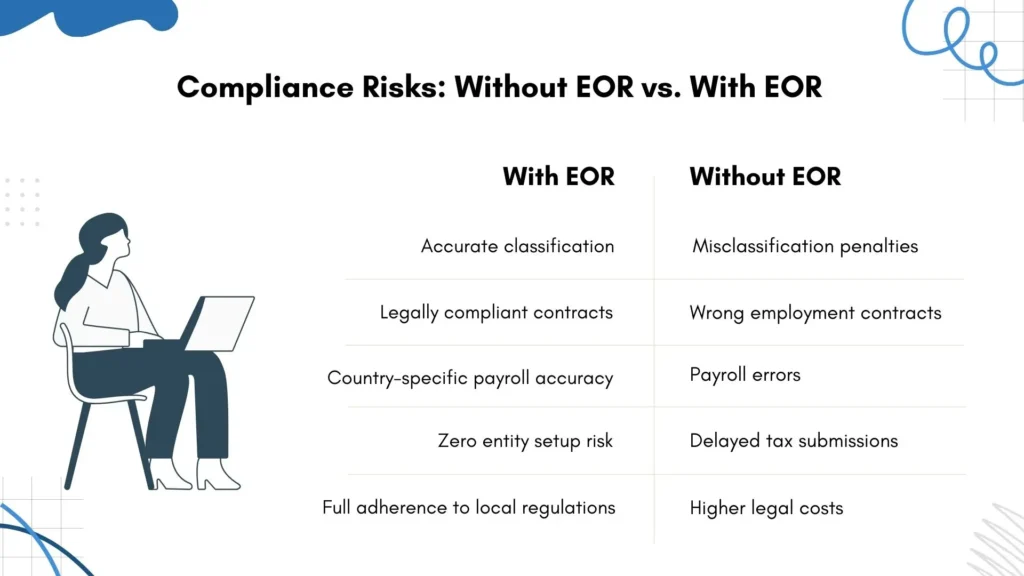
This is one of the most disregarded aspects as EORs also insure companies against misclassification risks.In many countries, treating a full-time worker as an independent contractor can lead to:
- hefty fines
- back payment of taxes
- social security penalties
- worker lawsuits
- reputational damage
In the co-employment model, such mistakes are avoided by providing a clear employer role by way of compliant contracts, statutory contributions and formal onboarding- mitigating the risk of misclassification to near zero.
Understanding local regulations, EORs allow the business to prevent the cases of labour conflicts, termination wrongfully, wage differences and benefits breach.
Strengthening Compliance Through Local Legal Expertise
Global expansion comes with extremely decentralized regulations, various countries, provinces and even cities have different regulations on wages, holidays, probation, notice, maternity benefits and termination.
This is why international labor law compliance is a core component of EOR operations.
EORs maintain legal teams and compliance specialists who monitor:
- local tax reforms
- labour code changes
- social security regulations
- industry-specific rules (IT, healthcare, manufacturing)
- collective bargaining agreements
- contract language updates
- statutory benefits changes
Their local expertise ensures businesses can focus on operations while remaining fully compliant at every stage of the employee lifecycle.
Entity-Free Hiring: Expanding Internationally Without Legal Complexity
Another area top blogs often miss is the financial and operational impact of entity formation. Setting up a foreign subsidiary requires:
- legal registration
- directors/representatives
- bank accounts
- audits
- tax compliance
- ongoing administrative maintenance
This is costly and time-consuming, especially when hiring limited headcount in a new market.
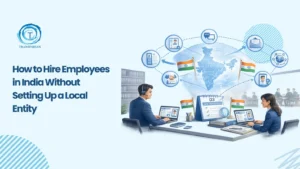
With entity-free hiring, companies can enter new countries within days, not months. Global EOR services manage employment legally without requiring the company to open a local entity, making expansion flexible, scalable, and cost-efficient.
Businesses avoid unnecessary risk, while employees get legally compliant employment contracts from day one.
How EORs Manage Payroll Accuracy and Benefits Delivery
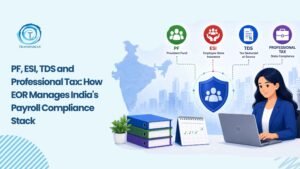
Payroll errors are one of the biggest compliance threats during global expansion. Each country has unique rules on:
- tax brackets
- withholding
- pension schemes
- social security
- wage protection laws
- overtime
- reimbursements
EOR services provide global payroll outsourcing, ensuring:
- zero payroll errors
- statutory deductions are correct
- payslips meet local government formats
- end-of-year tax documents are delivered
- multi-country payroll is consolidated in one system
This creates financial stability and job security for employees while reducing the burden on internal HR teams.
Additionally, EORs handle benefits administration healthcare, insurance, provident funds, paid leaves, travel allowances ensuring talent receives competitive and legally aligned benefits packages.
Employee Experience Under the Co-Employment Model
One critical area missed in many discussions is employee experience and its connection to job security.

EORs support employees through:
- seamless onboarding
- clear employment documentation
- timely salary credits
- responsive HR support
- compliant benefits
- training documentation
- safe work environment standards
This holistic support system builds trust and reduces turnover, helping remote and distributed teams stay aligned with company culture and goals.
How EORs Reduce Hiring Costs and Increase Global Workforce Flexibility
Companies in need of low-cost global expansion often believe that it is less expensive to hire contractors or freelancers, but the lack of compliance can result in fines, the threat of misclassification, and the existence of long-term expenses.
By using an EOR, companies avoid entity setup expenses, reduce legal and HR overhead, prevent payroll-related penalties, ensure accurate taxation, eliminate misclassification liability, and accelerate hiring timelines, all while strengthening multi-country workforce planning. Rather than having to deal with various labour regulations and taxation systems and contract laws on an international scale, businesses are using EOR services to simplify business and make budgets predictable, so they can easily and securely expand their international workforce.
Cross-Border Compliance: Handling Termination, Probation, and Local Worker Rights
Companies expanding internationally often underestimate cross–border compliance complexities like probation rules, termination notice, severance calculations, wrongful dismissal protection, and country-specific employee rights.
EORs help manage these sensitive areas by:
- preparing compliant employment agreements
- following statutory notice periods
- calculating severance accurately
- handling disputes legally
- maintaining proper termination records
- ensuring anti-discrimination compliance
This reduces risk for employers and prevents unfair or abrupt employee exits, further strengthening workplace security and fairness.
Supporting Strategic Global Workforce Expansion
Global EOR services enable companies to enter markets in India, the Philippines, Brazil, Europe and the Middle East without the need to establish their own legal entities or bear regulatory risk, as modern organizations desire to hire the best talent in any part of the world and global EOR services help them do so more quickly, safely and through less regulatory risk.
An EOR handles all processes of workforce, talent onboarding, local background check, standard benefits, country-specific HR and labour policy, time-tracking, ongoing compliance checks, and smooth payroll integration with the current HR systems. This all-purpose operational and legal support allows companies to expand to new markets with ease, less administrative load, and develop distributed, high-performing international teams in a more strategic way.
FAQ’s
The co-employment model is a structure where the Employer of Record becomes the legal employer for compliance and payroll, while the company manages day-to-day work. This ensures employees are protected under the correct local labor laws.
An EOR manages statutory compliance, tax filings, contracts, benefits, and labour law adherence in each country, reducing risks of misclassification, penalties, and legal disputes.
Employees receive legally compliant contracts, on-time payroll, statutory benefits, social security contributions, and protection under local employment laws, ensuring stable employment.
By shifting legal employer responsibilities like contracts, taxes, and mandatory benefits to the EOR, companies avoid violations of international labour laws or wrongful classification issues.
Absolutely. Small and mid-sized businesses benefit from entity-free hiring, lower expansion costs, and reduced legal complexity when hiring across borders.
Yes. EOR providers support long-term workforce scaling by managing compliance, contracts, benefits, and multi-country payroll as teams grow.