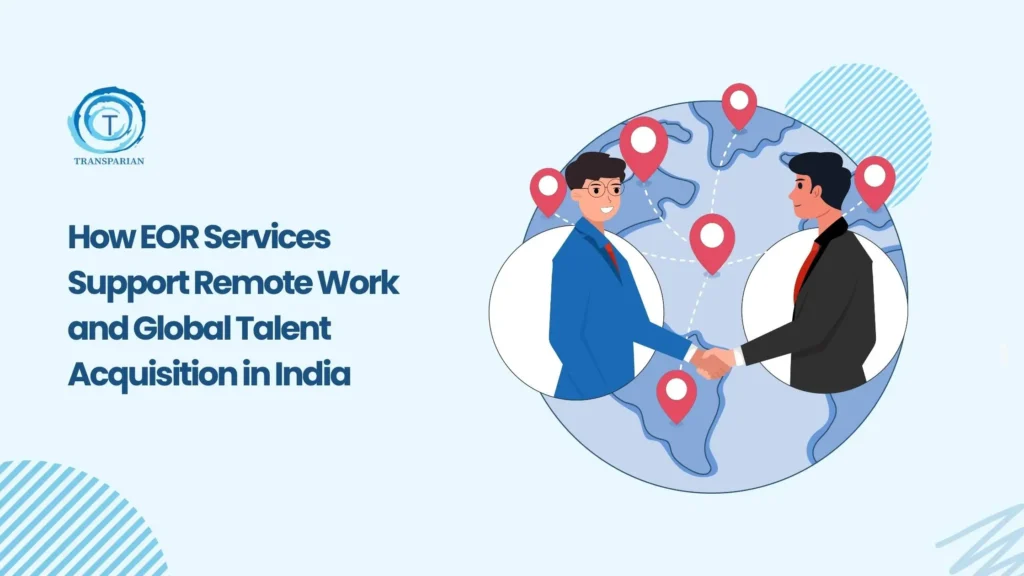
The rise of remote work has reshaped how companies hire, manage, and scale their workforce across borders. As organizations move toward distributed teams, India has emerged as one of the most attractive destinations for remote talent, especially in technology, finance, operations, design, and digital services. Yet hiring in India comes with a complex landscape of compliance requirements, payroll rules, statutory benefits, and evolving workforce expectations. That is where an employer of record model becomes a powerful solution for businesses looking to streamline international remote hiring, reduce legal risks, and accelerate access to world-class talent.
This blog explores what top content covers on the role of eor services in remote work and global hiring, while also expanding into critical missed topics like local regulations, compensation structure, transition planning, integration requirements, and remote employee experience. These are the questions companies are actively searching for when hiring in India and other global markets.
Why EOR Is Becoming Essential for Remote Work in India
Many companies are no longer establishing subsidiaries when building teams in India. This is because India provides a profound proficiency base, favorable remuneration standards and qualified remote-working culture. However, when directly hiring employees, one needs to go through the compliance intensive procedures such as PF, ESI, TDS, Shops and Establishment registration, POSH compliance, and local state regulations.
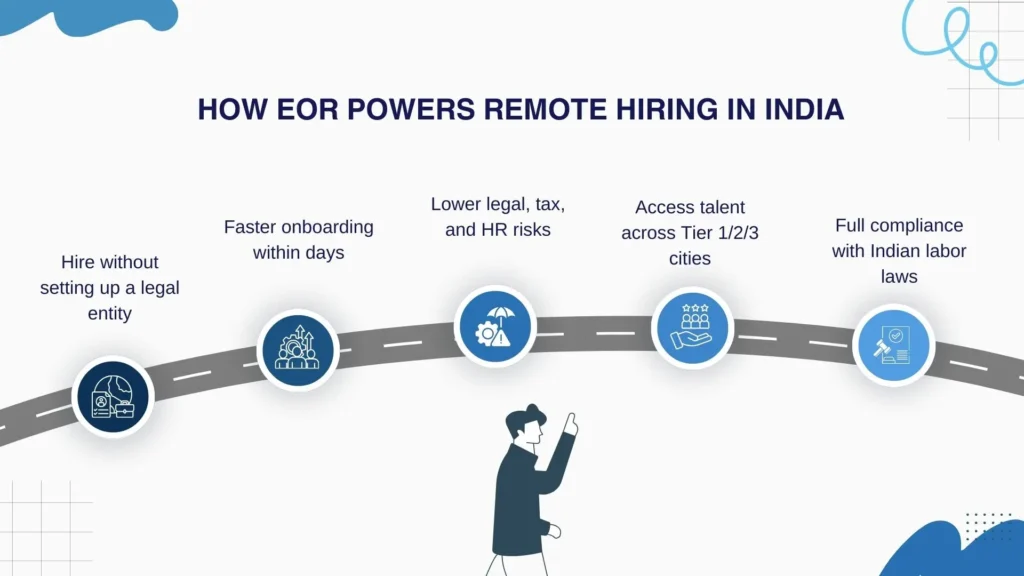
By collaborating with an eor company, the challenges are overcome as day-to-day work is managed by the organization, whereas the eor company assumes the position of the legal employer. The model, which removes entity establishment, administrative overhead and continuous employment law compliance, which many companies across the world are currently having difficulties with because of the regular changes in the regulations.
In the modern world, flexible and distributed work options are favored by the modern teams and with EOR structures it is possible to hire any place in India without geographical inhibition. Even deep talent pools in Tier 2/3 cities with increasing specialization skills and reduced attrition can be accessed by the companies through remote eor models.
Supporting Seamless International Remote Hiring
Hiring employees across borders comes with challenges like contract structure, benefits standardization, taxation, and statutory filings. An global eor partner handles all these complexities by:
- Creating compliant employment contracts under Indian labor regulations
- Ensuring compliant compensation components like Basic Pay, HRA, LTA, PF, and statutory deductions
- Maintaining accurate International payroll management
- Ensuring compliance with shops & establishment rules, working hours, and termination regulations
- Managing statutory registrations, ongoing filings, record maintenance, and audits
This also ensures clarity for remote workers. They receive legally compliant contracts, timely payroll, secure benefits, and structured onboarding support. Many global companies face challenges around remote employee documentation, TDS calculations, and payroll cycles when hiring in India, areas that a structured EOR framework resolves completely.
Accelerating Global Talent Acquisition Without Legal Risks
The companies venturing into India desire expediency, regulation, and capacity to recruit on a competitive basis. Conventional internationalization involves setting up of entities, registration of corporate taxes, labor laws, and on-going human resource management, which may take months. Under the employer of record services, firms are able to recruit within a few days, and still retain complete control over the work duties.
The EOR model eliminates the risk of permanent establishment, which is one of the leading questions many organizations pose nowadays. The wrong classification of remote employees or contractors may lead to imposition of tax, fines or violation of the compliance. That is why a good number of companies prefer to employ the structured employer-of-record strategy which is clear in the relation of employment and avoids the exposure to compliance.
In addition, there is an increase in the need to have fair compensation standards in India. Traits anticipated by the employees include clear salary concepts, statutory deductions, and benefits that are in tandem with the Indian employment standards. An eor firm will guarantee such alignment and allow the employers to know the cost structures and workforce planning fully.
Onboarding Remote Teams the Right Way
One of the most missed topics in competitor content is the practical onboarding of remote employees in India. Smooth onboarding remote teams requires:
- Verified documentation collection
- Employee ID and HRMS setup
- Understanding regional compliance rules
- Providing PF/ESI enrollment support
- Setting up leave policies aligned with state laws
- Providing endpoint security and IT setup for remote access
EOR partners streamline onboarding by offering structured processes, automated documentation flow, compliance-ready digital signatures, and guided induction for remote employees. This directly strengthens remote retention rates, productivity, and employer branding, elements rarely addressed in traditional EOR blogs.
Ensuring Local Labor Law Compliance for Remote Work
India’s regulatory framework is highly specific and varies by state. Topics like probation rules, notice periods, standing orders, maternity benefits, holiday lists, and state labor welfare fund requirements are often missing in standard EOR comparisons.
With an EOR, companies receive oversight on:
- local labor law compliance
- Weekly working hour norms
- Leave policies (earned leave, sick leave, casual leave)
- Overtime regulations
- Shops & establishment registration rules
- Maternity Benefit Act requirements
- Sexual harassment compliance (mandatory PoSH training & ICC setup)
- PF, ESI, TDS, Professional Tax, and state-level LWF rules
This reduces HR compliance burden and ensures employees feel secure and protected under Indian law.
Remote Workforce Management Beyond Payroll
Most blogs tightly focus on compliance and payroll, but organizations also want to know how to manage a remote team in India after hiring. Effective remote workforce management includes performance frameworks, communication norms, cultural alignment, L&D support, and employee productivity measurement.
EORs assist with:
- Employment lifecycle management
- Leave tracking
- Document storage
- Performance policy support
- HR support tickets for employee queries
- Local statutory changes and updates
- Exit management, FnF, and separation formalities
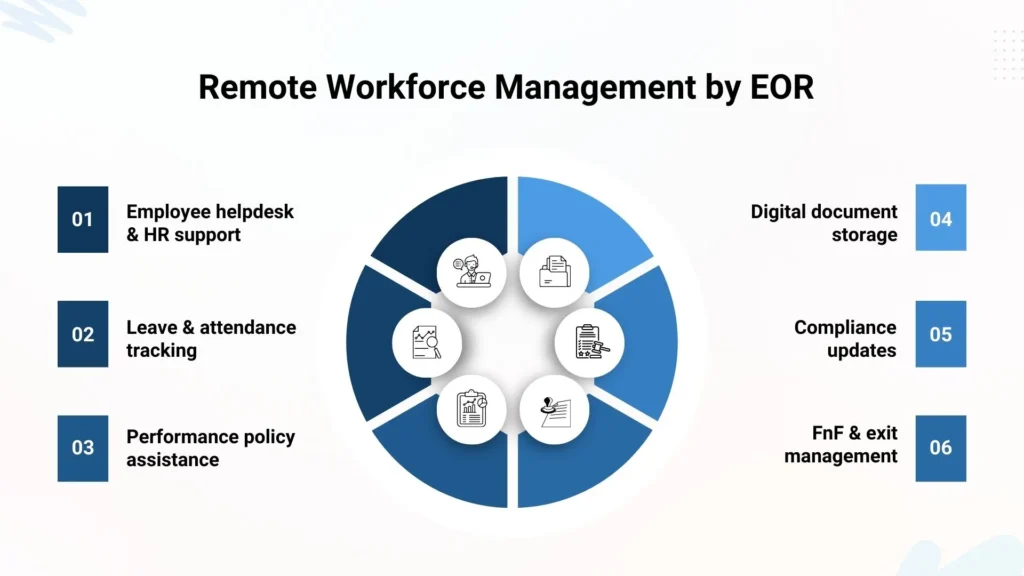
Employees receive clarity around HR processes while employers maintain operational control.
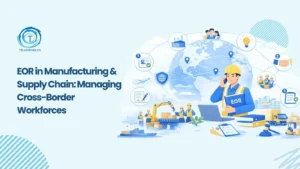
Supporting Cross-Border Hiring and Mobility
As companies expand globally, many now want flexibility to shift employees across countries, manage cross-border roles, or support hybrid work models. EORs simplify cross-border hiring by:
- Supporting multi-country compliance
- Facilitating payroll in different currencies
- Handling expat benefits and taxation
- Managing cross-border data privacy requirements
- Helping with statutory documentation for employees working temporarily across geographies
This ensures organizations can build multi-country teams without setting up several entities.
Technology, Integrations & Scalability
A major gap in most existing content is technology. Companies want to know how an EOR integrates with:
- HRMS tools
- Time-tracking apps
- Performance platforms
- Accounting systems
- ERP platforms
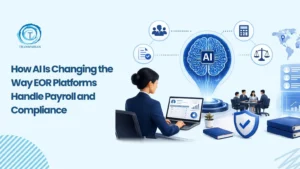
Modern eor services offer automated payroll workflows, compliance dashboards, document management, and audit trails. These enable better decision-making and reduce manual HR effort, especially important for fast-scaling companies.
Another missed area is scalability. Companies want to hire 1 employee today and 50 next year. EOR services support flexible hiring models, allowing businesses to scale teams across multiple Indian states without new compliance registrations or setup costs.
India-Specific Insights Companies Want
Companies researching remote hiring in India also search for:
- Local compensation benchmarks
- Statutory benefit expectations
- Regional salary differences
- Retention strategies for Indian remote teams
- Mandatory compliance checklists
- Remote employee engagement strategies
- Local holiday calendars & payroll cycle differences
- Cost-to-company (CTC) structures
These insights help build competitive offers and avoid attrition, making them essential for strong global talent acquisition outcomes.
FAQ’s
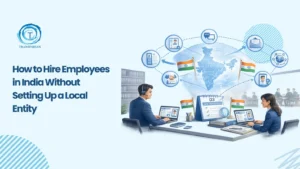
An Employer of Record (EOR) is a legal employer for remote employees. It helps international companies hire talent in India without setting up a local entity while managing payroll, contracts, compliance, and statutory benefits. This enables fast and risk-free remote team hiring.
EOR services allow companies to hire skilled professionals from India quickly, manage employment lifecycle, ensure compliance with state and national laws, handle payroll, and onboard employees seamlessly making global talent acquisition smooth and scalable.
EORs monitor changing regulations and manage mandatory compliances like PF, ESI, TDS, Shops & Establishment, Professional Tax, and PoSH requirements to ensure both the employer and employee remain fully compliant.
Yes. An EOR handles international payroll management, including salary calculations, statutory deductions, payslips, benefits, reimbursements, and end-of-year filings to match Indian legal standards.
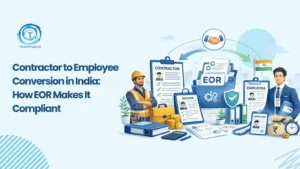
Yes. Misclassifying employees as contractors can trigger penalties and legal issues. An EOR ensures proper employment contracts and compliance structures that eliminate misclassification risks.
Startups, SMBs, and global enterprises that want to hire in India quickly, test new markets, avoid legal complexity, or build remote teams without establishing a legal entity can all benefit from an EOR.