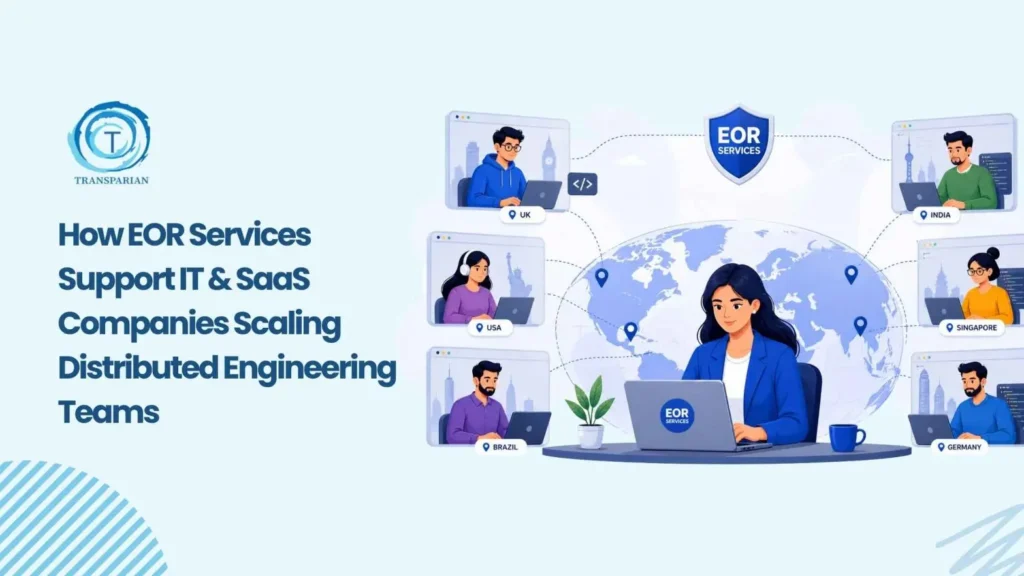
There’s a specific kind of problem that shows up when a tech company starts hiring engineers in another country for the first time. You’ve found the right person, agreed on a salary, and everyone’s ready to start and then someone asks: how do we actually pay them? Do we have a legal entity there? What about PF contributions? Who drafts the contract?
For many IT and SaaS companies, that moment is when the hiring process quietly stalls. Setting up a foreign subsidiary takes months. Engaging a local law firm for one hire feels disproportionate. And just paying someone as a contractor, when the relationship is clearly employment, creates a misclassification risk that can come back to bite you.
This is exactly the gap that EOR services fill. An Employer of Record becomes the legal employer of your overseas team members handling contracts, payroll, statutory contributions, and compliance while you keep full control over the work they do. For distributed engineering teams, it’s one of the most practical hiring structures available.
The Compliance Reality of Hiring Engineers Across Borders
India is one of the most popular destinations for engineering talent, and also one of the more complex places to manage employment. The compliance stack is real and it varies depending on where in India your employee works. At minimum, you’re dealing with:
- Provident Fund (PF) contributions and filings
- Employee State Insurance (ESI) — applicable based on salary thresholds
- Tax Deducted at Source (TDS) calculations and remittances
- Professional tax, which differs by state
- Shops & Establishment Act registration, which varies city by city
A company hiring in Bengaluru is dealing with different state-level rules than one hiring in Pune or Hyderabad. Most foreign companies don’t have the bandwidth to track that themselves, especially when they’re also managing teams in Poland, the Philippines, or Colombia.
The legal and financial compliance challenges for businesses hiring in India are well-documented and they multiply the moment you add a second or third country to the mix. EOR providers carry the compliance burden in each jurisdiction, so your HR team doesn’t have to become local experts in every market where you hire.
Speed Matters More Than Most Companies Realise
Good engineers don’t wait. In competitive markets Bengaluru, Warsaw, Manila, a strong candidate might be weighing two or three offers at once. If your hiring process is held up by entity setup or legal reviews, you lose to companies that are ready to move.
One of the more practical advantages of using an EOR is turnaround time. Because the EOR already has the registrations, payroll infrastructure, and contract templates in place, a new hire can be onboarded in 7 to 14 business days. The employee onboarding process in India from offer letter to first payroll runs through the EOR’s existing framework, which means no delays waiting for a subsidiary to be set up.
For fast-scaling SaaS companies that need to double engineering headcount in a quarter, that speed is the difference between hitting a product deadline and missing it.
What EOR Actually Handles Day to Day
It’s worth being specific about what an EOR takes off your plate, because it’s more than just payroll. Once your engineer is hired through an EOR, the provider manages:
- Monthly salary processing, including statutory deductions
- PF and ESI filings and contributions
- TDS calculations and remittances
- Employment contracts compliant with local labour law
- Leave tracking and entitlement management
- Exit formalities and full-and-final settlements
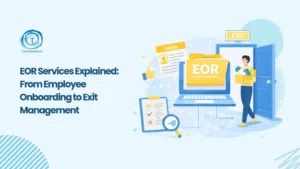
The full lifecycle from onboarding to exit management sits with the EOR, which matters especially when you eventually need to offboard someone. Getting exit formalities wrong in countries with strong employee protections is an easy way to end up in a dispute. EOR providers manage that process in line with local law, not guesswork.
Build Distributed Teams with Ease
Expand your IT team faster with reliable EOR solutions.
IP Protection Doesn’t Happen by Default
One thing tech companies often overlook when hiring internationally: IP ownership isn’t automatic. In some countries, the default under employment law doesn’t clearly vest IP rights with the employer unless the contract explicitly says so. For a software company, that’s a serious gap.
EOR providers ensure that employment agreements in each country include the right protections. That typically means:
- IP assignment clauses drafted to hold up under local law, not just copied from a US template
- Confidentiality obligations that cover both current and post-employment periods
- Non-solicitation provisions that are actually enforceable in the relevant jurisdiction
It’s the kind of detail that doesn’t feel urgent until there’s a dispute, or until you’re going through due diligence for a funding round or acquisition and someone starts asking questions about IP ownership for your offshore team.
Managing Remote Teams Across Multiple Hubs
Most IT and SaaS companies with mature global talent strategies aren’t hiring in just one country. A typical setup might have a backend team in India, QA engineers in Eastern Europe, and customer support in the Philippines, each location with its own payroll rules, benefit norms, and employment law framework.
Managing that internally means building compliance knowledge for every market or relying on separate local vendors in each one. Neither scales well. The practical problems stack up quickly:
- Different payroll cycles and currency requirements per country
- Different statutory benefit structures, what’s mandatory in India isn’t in Poland
- Different rules on probation, notice periods, and termination
- Different documentation requirements for employment contracts and tax filings
An EOR consolidates all of it under one arrangement: one vendor, one process, one point of accountability, while the actual compliance work happens locally in each country.
For companies thinking about remote work and global talent acquisition, this centralised model also makes it significantly easier to maintain consistent employment standards across a distributed team. Employees in different countries experience a structured, professional onboarding and HR process rather than a patchwork of local arrangements.
Scaling Down Is Just as Important as Scaling Up
Tech companies restructure. Products get deprioritised, funding timelines shift, and teams that were built for one roadmap get resized for another. Scaling down a team in a country with strong worker protections without following the correct process can result in wrongful termination claims, back-pay disputes, or regulatory investigations.
EOR providers manage workforce reductions properly. When it comes to offboarding, that includes:
- Calculating the correct notice period under local employment law
- Computing severance entitlements accurately, including any statutory gratuity obligations
- Preparing exit documentation and full-and-final settlement statements
- Managing the compliance paperwork so the exit is clean from a regulatory standpoint
For a tech company that’s gone through rapid growth and then needs to right-size, having that process handled correctly matters both legally and reputationally. Candidates remember how companies treat people on the way out.
For startups especially, understanding this before you hire is important. If you’re wondering whether EOR services make sense for early-stage companies, the short answer is yes, partly because of how they handle scale-up, but also because of how they protect you when you need to scale back.
EOR vs Other Hiring Models for Tech Teams
Some companies try to manage international engineering hires through traditional outsourcing arrangements or body-shopping models. These can work for project-based work, but they’re not the right structure for employees who are genuinely part of your team attending standups, contributing to your codebase, working under your direction.
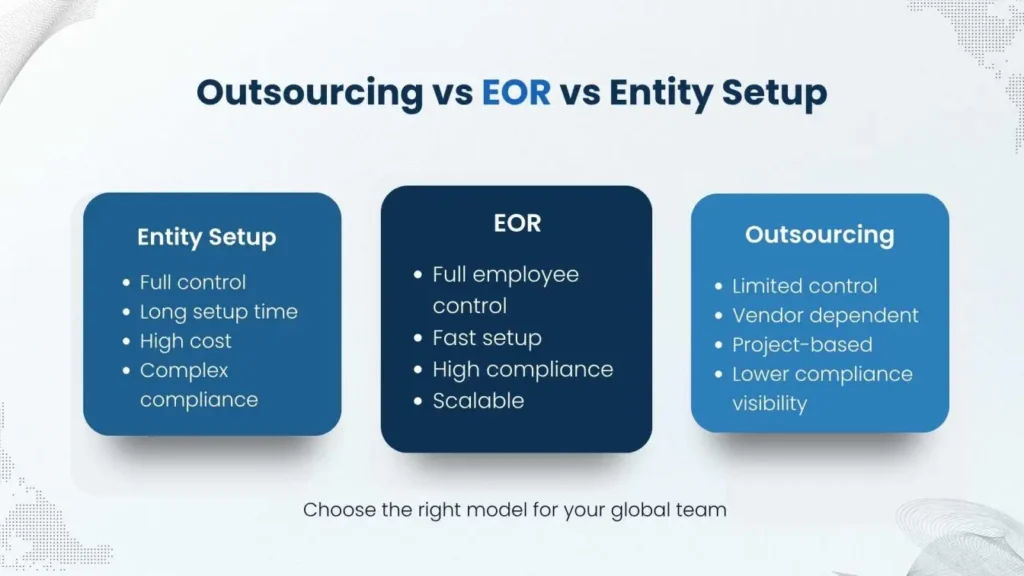
When the relationship looks and functions like employment, it needs to be structured as employment. The comparison between EOR and traditional outsourcing is worth reading if you’re weighing models, the key distinction is legal employer status and the compliance obligations that come with it.
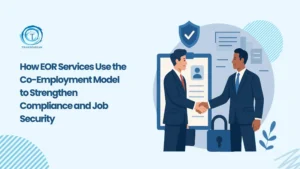
The co-employment model that EOR services are built on gives companies operational control while the EOR takes on the legal employer responsibilities. For most tech companies building distributed teams, that’s the right balance.
A Practical Model for a Global Engineering Team
There’s nothing theoretical about this. A US-based SaaS company with 15 engineers in Bengaluru, 8 in Krakow, and 5 in Manila is managing three different payroll systems, three different statutory contribution frameworks, and three different employment law regimes. Doing that through separate local arrangements is a significant overhead and a significant risk surface if anything is missed.
Using an EOR collapses that complexity. The company’s HR team has one relationship, one reporting framework, and one vendor accountable for compliance in all three markets. The engineers have a structured employment experience on-time pay, proper benefits, clear contracts. And the company has a hiring model that saves time, reduces cost, and eliminates compliance risk without requiring a subsidiary in every country where great engineers happen to live.
That’s not a small thing when you’re trying to ship a product.
Let Transparian Support Your Global Tech Hiring
From managing employment contracts and payroll compliance to ensuring every engineer across your distributed team is onboarded correctly, Transparian provides expert EOR services for IT and SaaS companies. Through reliable global hiring solutions and experienced HR compliance support, Transparian helps fast-growing tech companies scale their teams quickly, legally, and without the overhead of setting up local entities.
FAQ’s
EOR services (Employer of Record) allow IT and SaaS companies to hire employees in other countries without setting up a local entity. The EOR becomes the legal employer and manages payroll, compliance, and contracts while the company controls daily work.
EOR services simplify global hiring by handling local labour laws, tax compliance, payroll processing, and employment contracts. This allows companies to onboard international employees quickly and legally.
Distributed engineering teams operate across multiple countries with different compliance requirements. EOR services ensure all employees are hired legally, paid correctly, and managed in line with local regulations.
Most companies can onboard international employees within 7 to 14 business days using an EOR, compared to months required for setting up a legal entity in a new country.
Yes, EOR services reduce risks like employee misclassification, non-compliance penalties, and legal disputes by ensuring proper employment structures and adherence to local laws.
Yes, EOR providers handle the full employee lifecycle, including onboarding, payroll setup, benefits management, and compliant offboarding with proper notice periods and settlements.