If you have spent any time in HR or global expansion conversations over the past couple of years, you have run into the term Employer of Record. It gets thrown around a lot, sometimes correctly, sometimes as a loose stand-in for “some way to hire people abroad.” Going into 2026, with remote work now a permanent fixture and companies hiring across more borders than ever, it is worth getting a clear, accurate picture of what an EOR actually is, how it works, and where it fits.
This guide breaks it down properly; no jargon, no vague promises, just what the model is and when it makes sense.
The Basic Definition
An Employer of Record is a third-party organization that becomes the legal employer of your worker in a country where you don’t have your own registered entity. The EOR handles the formal side of employment, contracts, payroll, statutory contributions, tax filings, and compliance while you retain full control over the actual work. You decide what the person does, how they’re managed, and what they’re accountable for. The EOR just makes sure the employment relationship is legally sound in that country.
It’s a simple idea once you strip away the buzzwords: someone else carries the legal employer responsibility, you carry the operational one.
Why This Model Exists in the First Place
Setting up a legal entity in a new country is not a quick process. Depending on the market, it can take anywhere from three to six months, involve significant legal and accounting costs, and come with ongoing compliance obligations that don’t go away once the entity is registered. For a company that wants to hire one or two people in a new market to test it out, support a client, or fill a specific skill gap, that timeline and cost rarely make sense.
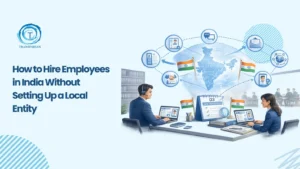
EOR services exist to solve exactly this problem. Instead of waiting months and spending heavily to set up an entity, a company can have someone legally employed and on payroll within weeks, without ever registering a local business.
How the Relationship Actually Works
The structure is sometimes called co-employment, and it’s worth understanding clearly because it explains why the model holds up legally.
- The EOR is the legal employer responsible for the employment contract, payroll processing, statutory contributions, and tax compliance.
- Your company is the functional employer responsible for the person’s role, workload, performance, and day-to-day direction.
- The employee has a single, clear employment relationship with full statutory protections, even though two organizations are involved behind the scenes.
This split is what makes the co-employment model work well for both sides. The employee gets proper benefits and job security. The company gets operational control without the compliance burden.
What an EOR Actually Covers
A genuine EOR engagement typically includes:
- Drafting employment contracts that comply with local labor law
- Processing monthly payroll, including statutory deductions
- Managing Provident Fund, ESIC, professional tax, and other local contributions
- Filing tax returns and other statutory paperwork on schedule
- Administering statutory leave, benefits, and entitlements
- Handling the entire employment lifecycle, including onboarding through to exit
That last point matters more than it sounds. A lot of conversations about EOR focus on the hiring part, but the value really shows up across the full lifecycle managing the onboarding process correctly from day one, and handling exits, terminations, and final settlements in a way that holds up legally if it’s ever questioned.
Why It Matters More in 2026 Than It Did a Few Years Ago
A few shifts have made this model more relevant heading into 2026, not less:
- Remote-first hiring is normal now. Companies aren’t just hiring where they have offices anymore. They’re hiring wherever the right person happens to be, which means global talent acquisition increasingly happens without any local physical presence at all.
- Regulators are paying closer attention to misclassification. Plenty of companies historically got around the entity problem by hiring people as contractors instead of employees. That workaround is getting riskier. Authorities in several markets, India included, have sharpened their focus on misclassification, and getting reclassified after the fact can mean back taxes, penalties, and retroactive benefit obligations.
- Speed has become a competitive factor. Hiring timelines have compressed across most industries. Waiting months for entity setup just to make one hire is no longer something most companies are willing to do.
EOR vs. the Other Options
It helps to see where EOR sits relative to the alternatives, because it’s often confused with each of them.
EOR vs. setting up your own entity. An entity makes sense when you’re committed to a market long-term and plan to scale headcount significantly. EOR makes sense when you’re not there yet, or never plan to be at that scale.
EOR vs. traditional outsourcing. This comparison comes up a lot, and the distinction is worth being precise about. Outsourcing typically hands an entire function or project to a vendor that manages its own staff, with limited day-to-day input from you. EOR keeps the person under your direct operational control, they’re your team member in every functional sense, just legally employed by someone else.
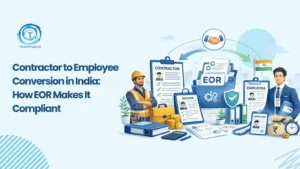
EOR vs. contractor agreements. Contractors work fine for genuinely independent, project-based work. The trouble starts when a “contractor” relationship starts looking like employment in practice, fixed hours, ongoing work, close supervision. That’s when misclassification risk creeps in, and EOR is generally the safer structure if the role looks like a real job.
Where EOR Actually Adds Value
Beyond avoiding entity setup, a few practical benefits come up consistently when companies talk about why they use this model:
- Time and cost savings. Avoiding entity registration, ongoing legal retainers, and the administrative overhead of running payroll in a foreign country adds up to real savings in time and money, particularly for smaller hiring volumes.
- Audit and due diligence readiness. When a regulator, investor, or acquirer comes asking questions about how your international workforce is structured, having a properly managed EOR relationship means the paperwork is already in order. This is especially relevant during audits, inspections, or due diligence processes, where compliance gaps tend to surface.
- A practical entry point for startups. Smaller, fast-growing companies rarely have the bandwidth to build international HR expertise in-house. Plenty of startups use EOR specifically because it lets them focus internal resources on the business itself, not on tracking labor law across multiple countries.
What to Look for in an EOR Partner
If you’ve decided the model fits your situation, the quality of the partner matters as much as the model itself. A few things worth checking before signing on:
- Do they have direct, on-the-ground experience in the specific country you’re hiring in, not just a generic global pitch?
- Are their employment contracts drafted for local law, or are they templated documents with the country name swapped in?
- What does their actual payroll accuracy track record look like?
- How transparent is their pricing, is the full cost laid out clearly, or are there fees buried in the fine print?
- Can they speak specifically to compliance challenges in that market, including the legal and financial obligations employers commonly run into?
A provider that can answer all of these clearly is a much safer bet than one that just promises speed and convenience.
Let Transparian Simplify Your Global Hiring
From drafting compliant employment contracts to managing payroll, PF, and ESIC filings for every hire, Transparian provides reliable EOR services for companies looking to hire in India without setting up a local entity. Through dependable global employment support and experienced HR compliance experts, Transparian helps growing businesses hire faster, stay compliant, and scale confidently across borders.
FAQ’s
An Employer of Record (EOR) is a third-party organization that legally employs workers on behalf of another company in a country where that company does not have a local entity. The EOR manages payroll, taxes, employment contracts, statutory benefits, and compliance, while the client company oversees the employee’s daily work and performance.
An EOR enables businesses to hire employees in foreign countries without establishing a local legal entity. It handles local employment laws, payroll processing, tax compliance, onboarding, and employee benefits, allowing companies to expand globally faster and with lower administrative burden.
A staffing agency typically recruits and supplies talent for temporary or project-based roles, while an EOR becomes the legal employer of workers hired by the client company. With an EOR, employees work directly for the client company operationally, but are employed legally by the EOR.
Yes. An EOR can legally employ workers in India on behalf of foreign companies. The EOR manages employment contracts, payroll, Provident Fund (PF), ESIC contributions, tax deductions, labor law compliance, and employee onboarding without requiring the foreign company to establish an Indian entity.
Most EOR solutions include employment contract management, payroll processing, tax withholding, statutory benefits administration, onboarding support, leave management, compliance monitoring, employee record maintenance, and assistance with offboarding and final settlements.
The timeline varies by country and documentation requirements, but many EOR providers can onboard employees within a few days to a few weeks. This is significantly faster than establishing a local legal entity, which can take several months.